RSA (Reading School of Art) hosts an annual exhibition showcasing the final work of BA and MA students, supported with a printed catalogue. As lead designer,
I worked with the publication committee to develop the design, manage the budget, and oversee print production.
The project was highly collaborative, involving over 50 students, lecturers, and university stakeholders. With many voices involved, establishing clear priorities was essential to maintaining focus. I hosted weekly meetings with the team, where we dug deep into their user needs, and identified key objectives that served as guideposts to keep the project aligned.
Objective 1: The publication should favour everyone’s work equally.
As part of the research process, I brought copies of previous years’ publications to our initial meetings and asked students for their feedback. One MA student shared a concern:
“
Every single year, we [The MA students] are left at the back of the book, and are forgotten about. It makes us feel like we are less important”
Followed shortly by a BA student:
“
But if you [The MAs] are at the front, we [the BAs] are the ones left behind. We can’t prevent that”
This comment stayed with me. Perhaps the problem was the conventional format of a Western book. What if it wasn't a book at all? What if the publication didn't follow a linear, front-to-back reading order?
After all, reading conventions vary across cultures—some systems move vertically, while others follow a boustrophedon pattern, reading alternately from left to right and right to left, or “as the ox ploughs.”
This led me to question whether the students needed to be ordered at all. Could their work instead be organised through a non-hierarchical system, such as colour?
While researching alternative book formats, I discovered the tête-bêche (French for “head-to-tail”). These books contain two narratives that begin from opposite ends and meet in the middle. This approach allowed us to eliminate the notion of a single “front” or “back”, creating instead two equal entry points: one for BA students and one for MA students.
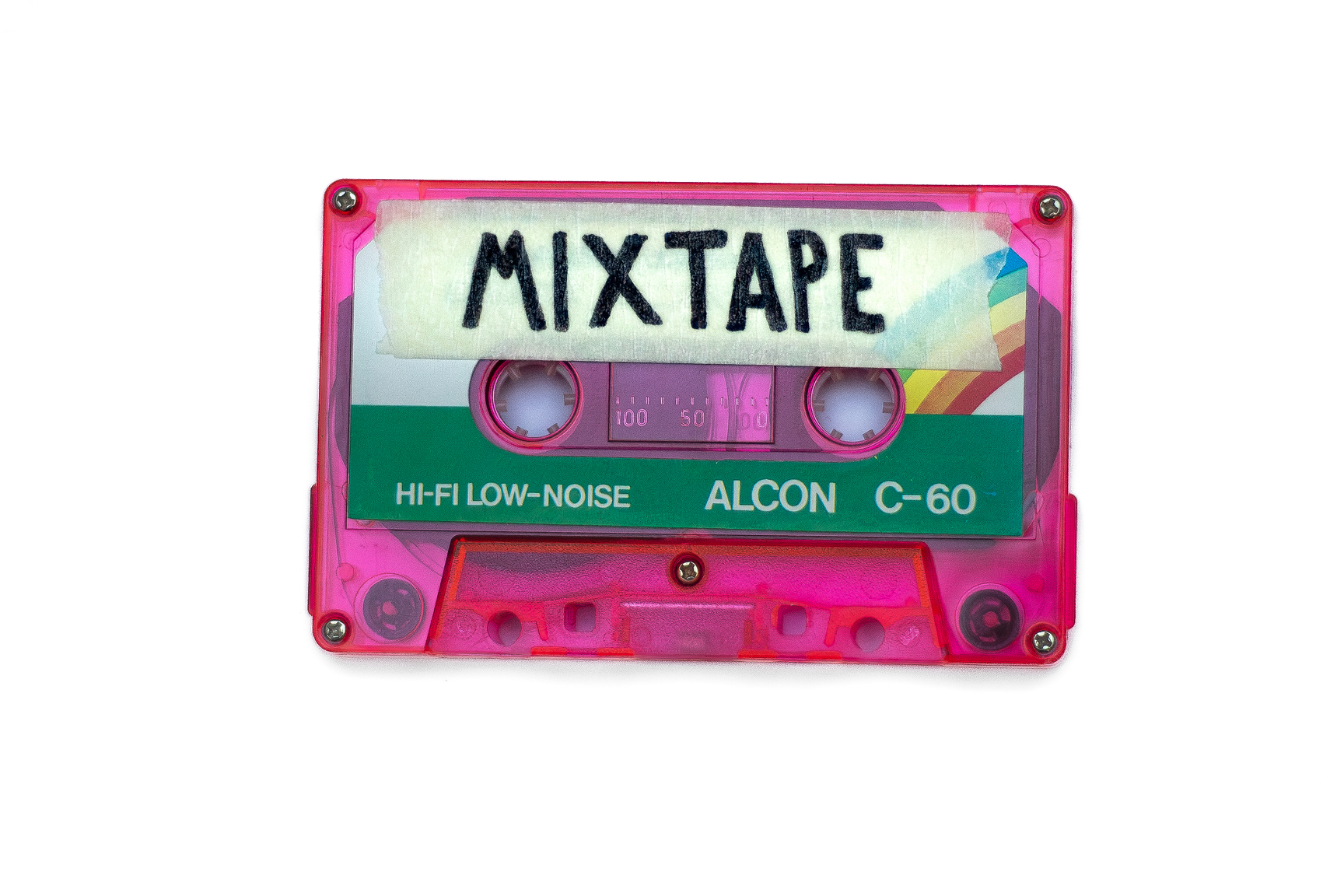
This concept also lent itself naturally to the publication’s title, Mixtape, echoing the idea of “Side A” and “Side B” found on traditional mixtapes.
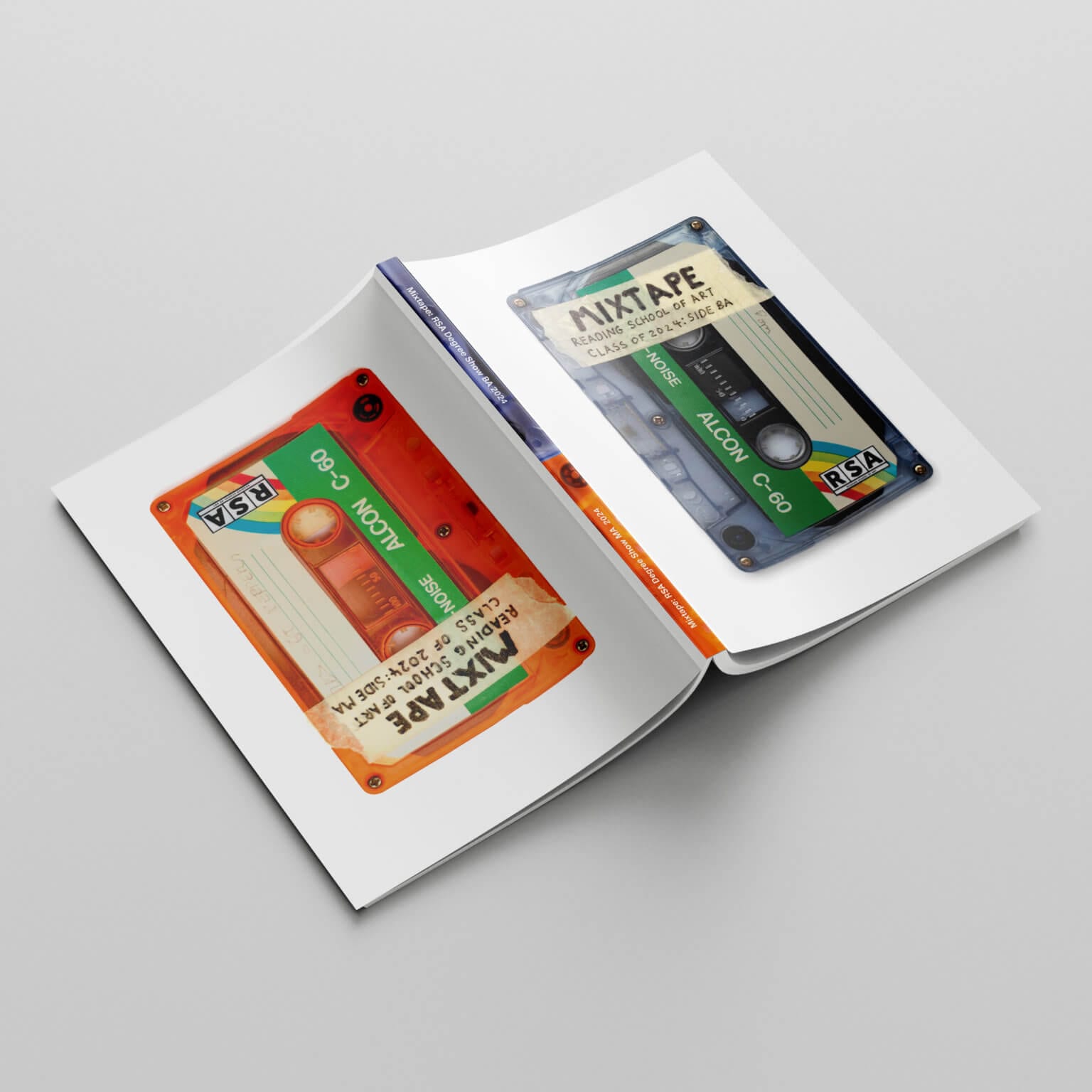
Figure 1. Tête-bêche style covers.
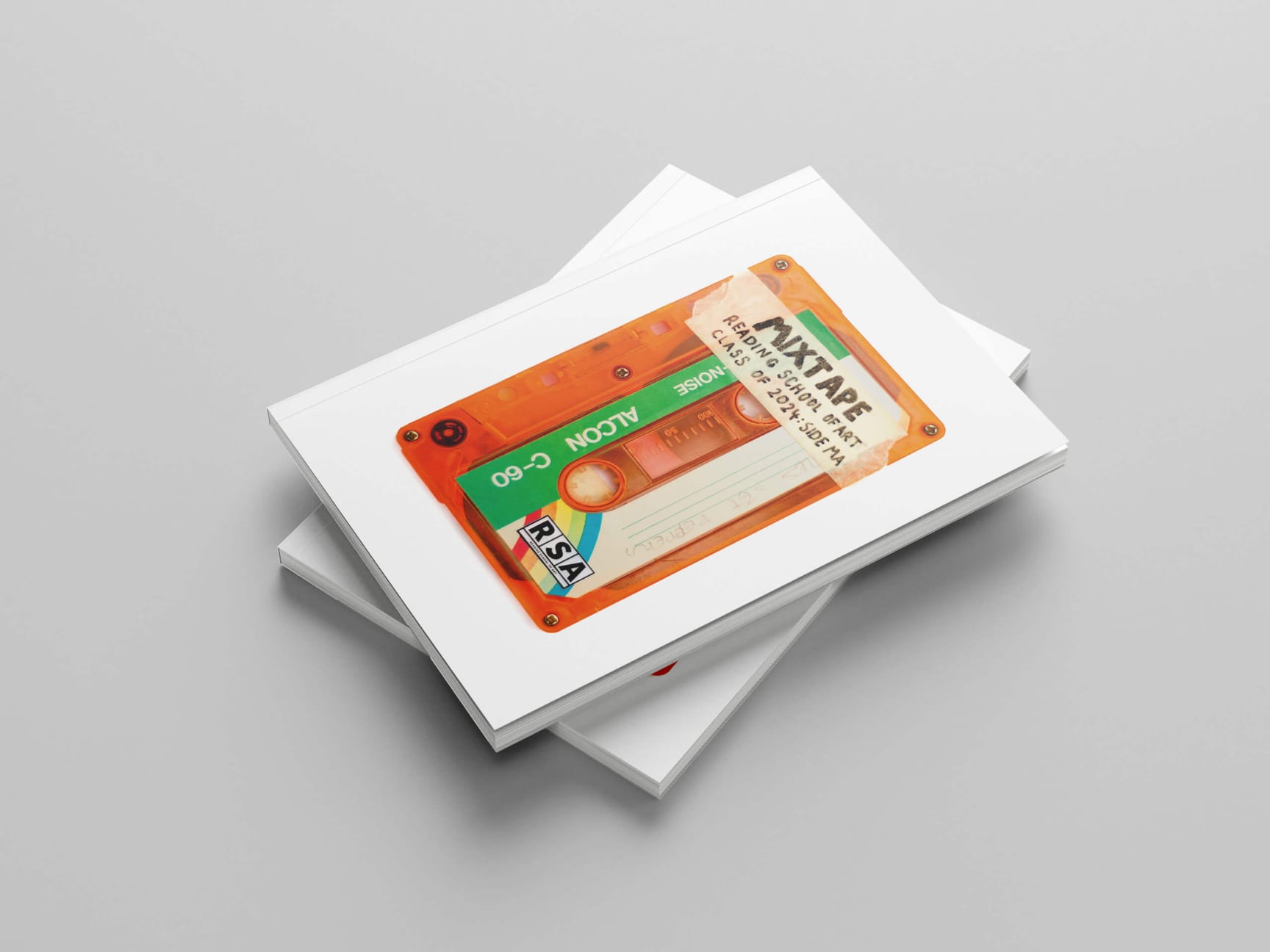
Figure 2. MA cover.
Objective 2: The design should reflect the artwork as accurately as possible
Preserving the integrity of the artwork was a key priority throughout the project. We continually evaluated whether each piece was being represented as faithfully as possible, considering not only image quality but also scale, context, and relationships between pieces. Key questions guided these decisions: How large is this piece in reality? Is it part of a series? Do the colours need to be adjusted to better reflect the original artwork? Should certain images be shown together to aid comparison and understanding?
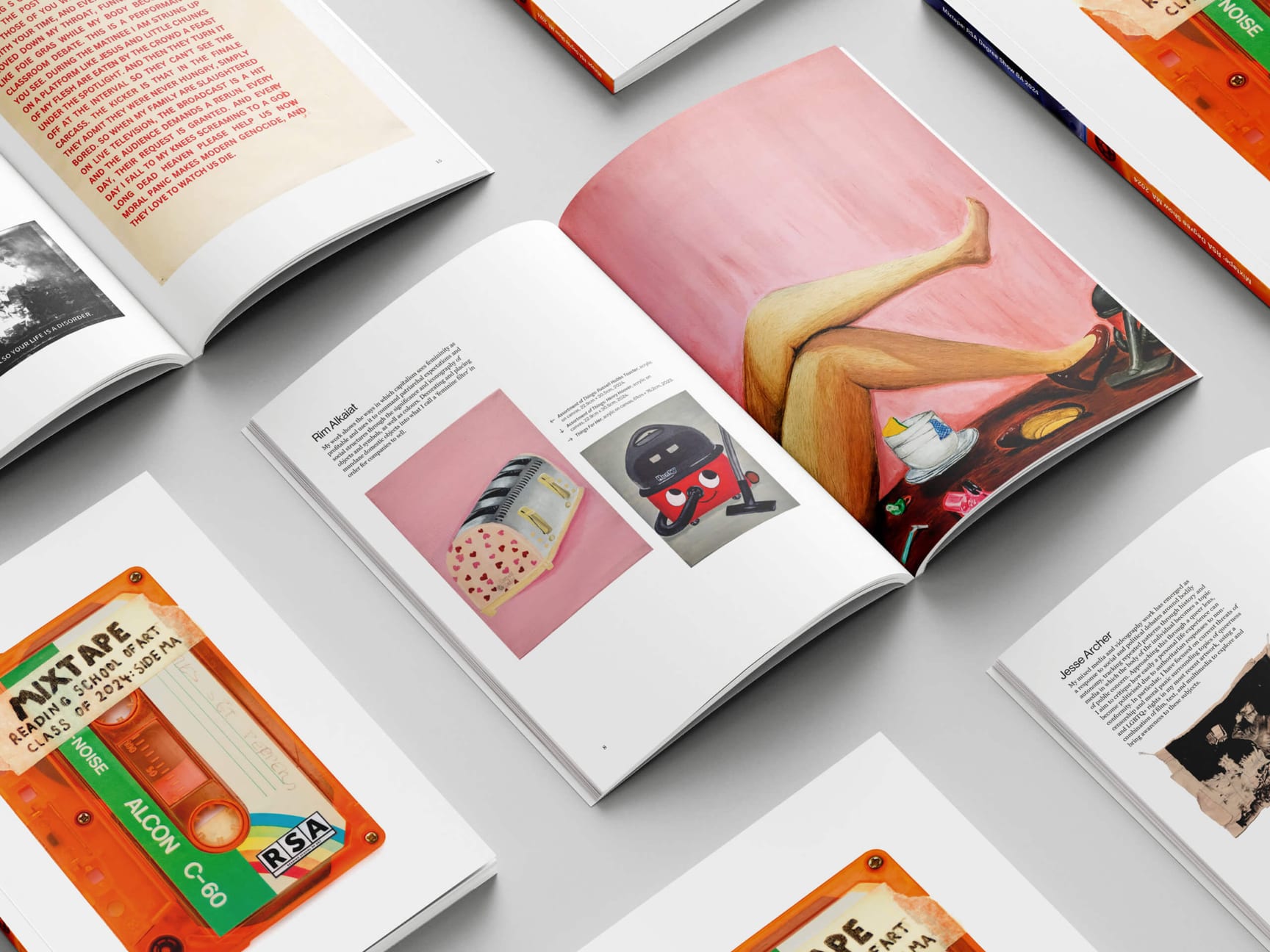
Figure 3. Mixtape covers and inside pages.
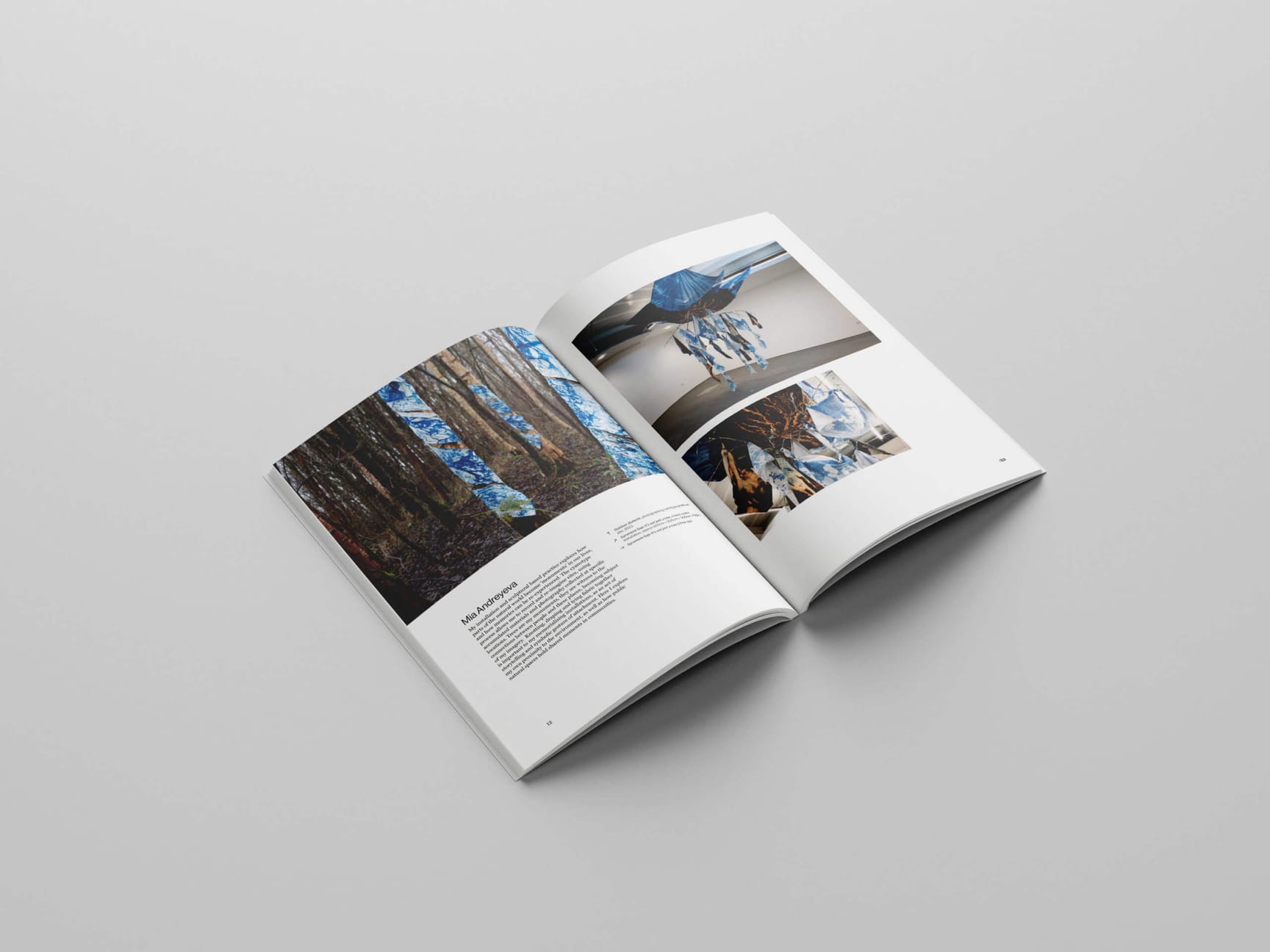
Objective 3: The publication design shouldn’t take away from the artwork
A recurring criticism of previous editions was that the design of the artist pages competed with the artwork itself. As a result, we adopted a clean, simple layout that placed the artists' work at the forefront.
“
Last year, the graphic design of the book was louder than the photos of our artwork, it was distracting from our pieces”
Whilst the artist pages were intentionally restrained and professional, the cover and prelims provided an opportunity to explore the Mixtape theme more freely.
The inside cover (Figure 7) features a photograph of a desk in the RSA studio, strewn with objects contributed by every student. The resulting collage captures both the individuality of each artist and their shared experience at the University of Reading. These objects are interspersed with mixtapes and film rolls, marrying the publication's theme with the students' personal creative journeys.
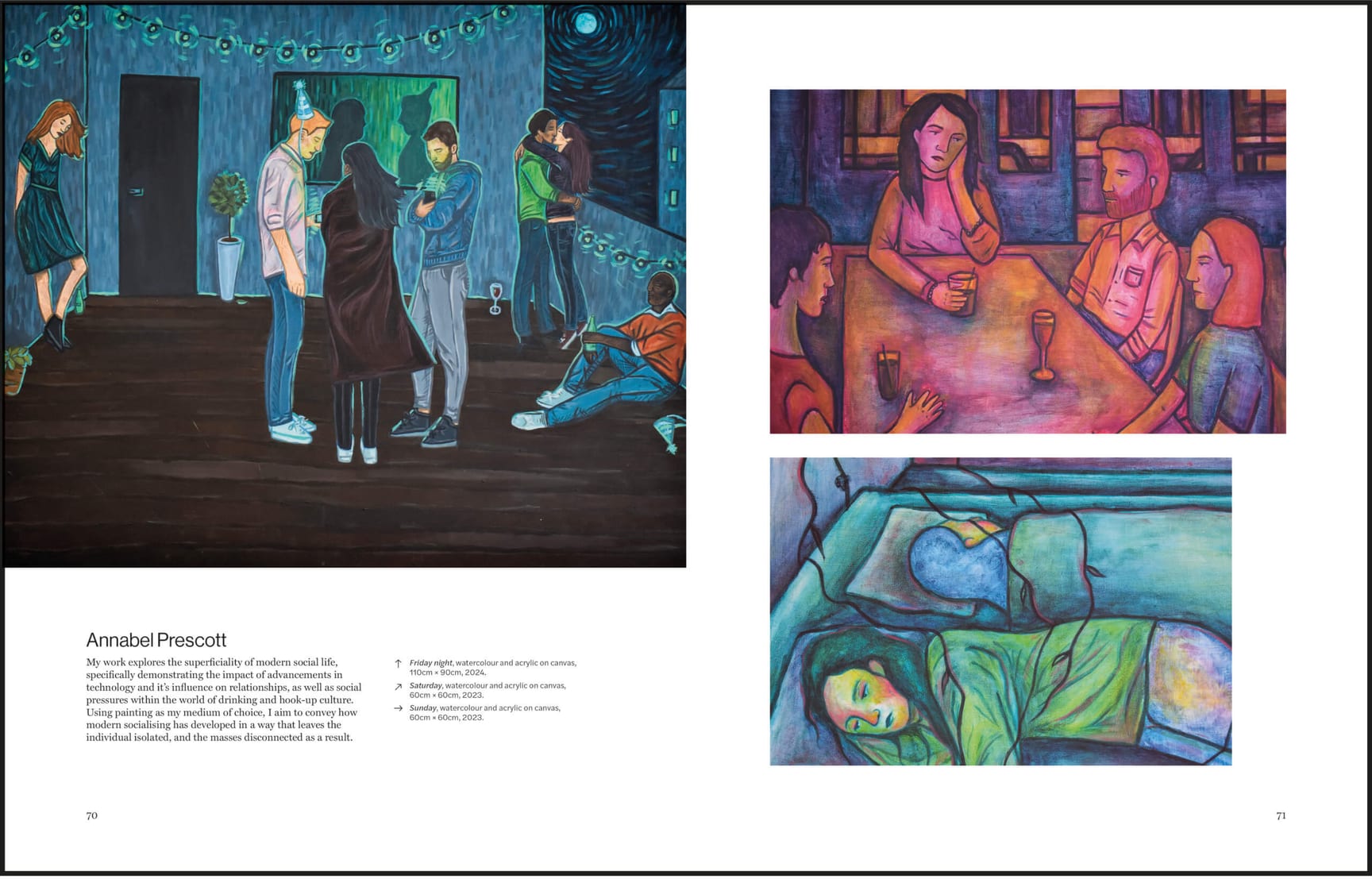
Figure 4. BA artist inside spread.
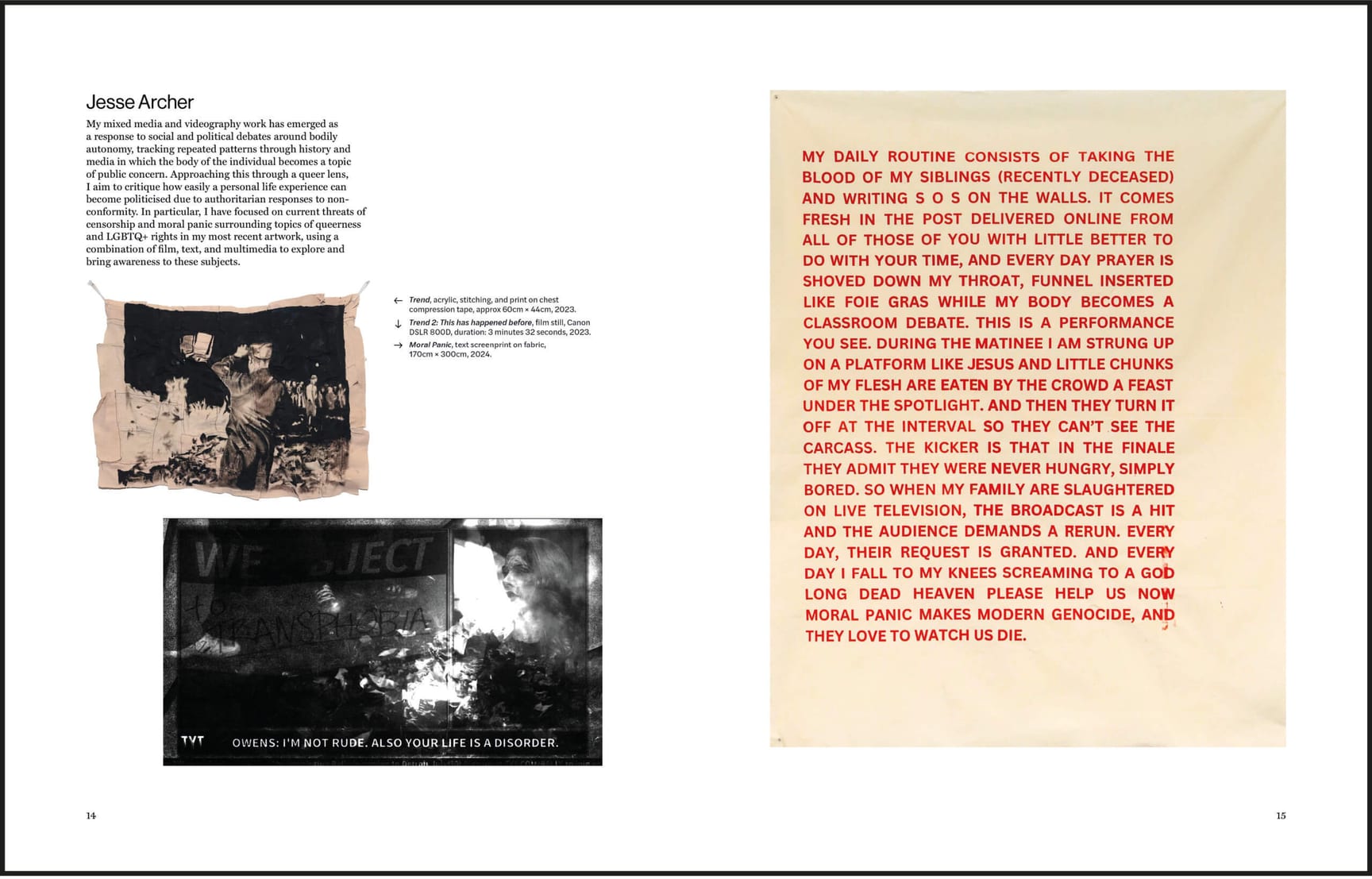
Figure 5. BA artist inside spread.
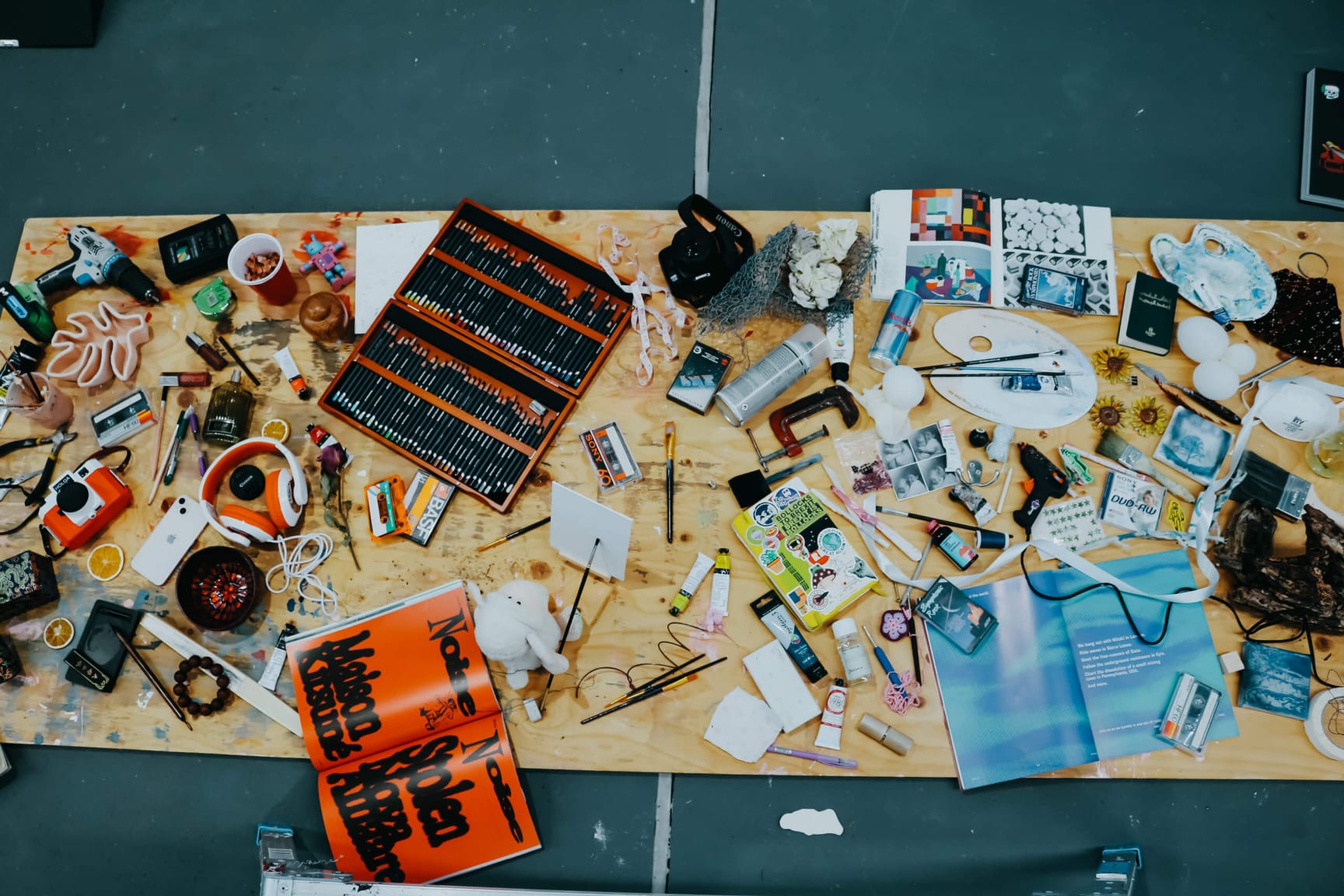
Figure 6. BA artist inside spread.
Figure 7. Photograph of artist desk spread.
Conclusion
As the project drew to a close, I developed a real appreciation for the relationship that had formed between the RSA team and my design team. The students brought an incredible amount of passion to the process, and their voices were instrumental in shaping a publication that genuinely reflected their needs and creative practices.
The project reinforced my love of using design as a tool for problem-solving, challenging conventions, questioning assumptions, and finding creative solutions to real user needs. Holding the physical print of the project was an incredibly satisfying moment, and a reminder of why I love designing for print.
Manchester UCAS Fair
I had the opportunity to work at the Manchester UCAS fair promoting the RSA course, as well as the Graphic Communications and Typography course (my undergrad!). Here I was able to talk to prospective students about the publication, which was used as a promotional asset to advertise the course.
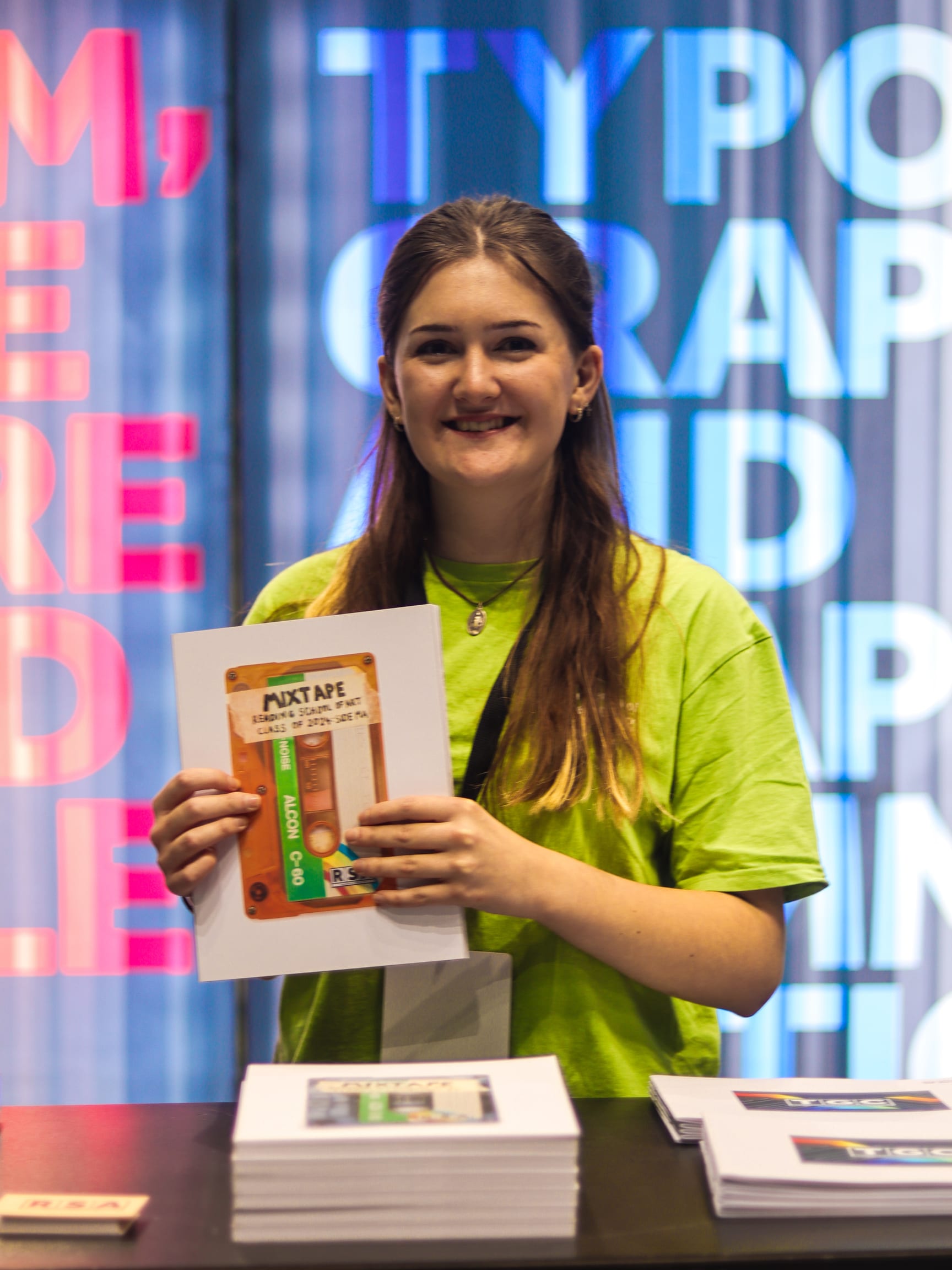
Figure 8. Displaying Mixtape at the Manchester UCAS Fair.
Client Testimonial
Following the exhibition, I received a testimonial from the head of the RSA course in reference to the project:
“
It was great working with Amy as project and design lead on our Final Year Art Degree Show publication. The publication received many compliments from participating artists and exhibition audiences.
Our team felt that our initial ideas were beautifully translated, and the development and process was really collaborative. Overall the project was managed and delivered very professionally.”
Susanne Clausen, Professor of Fine Art, University of Reading.