The Healing Garden
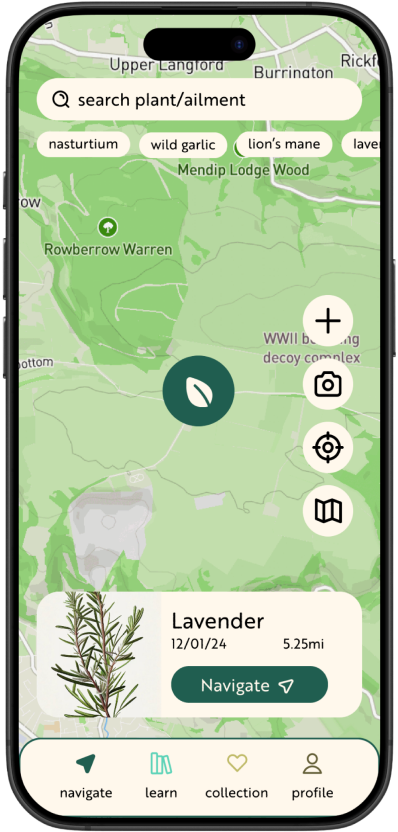
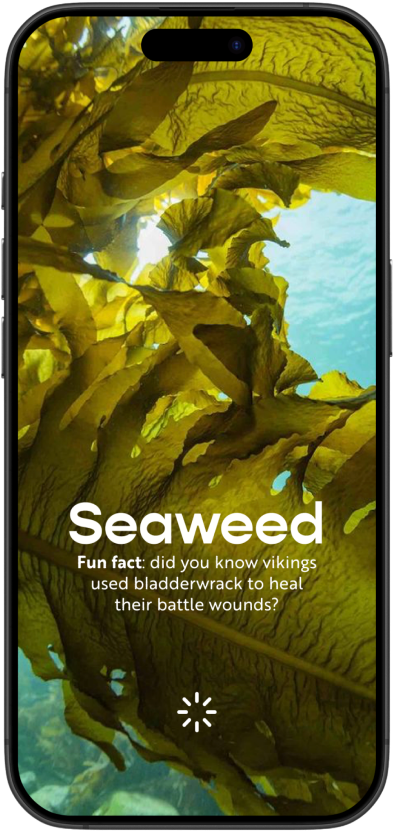
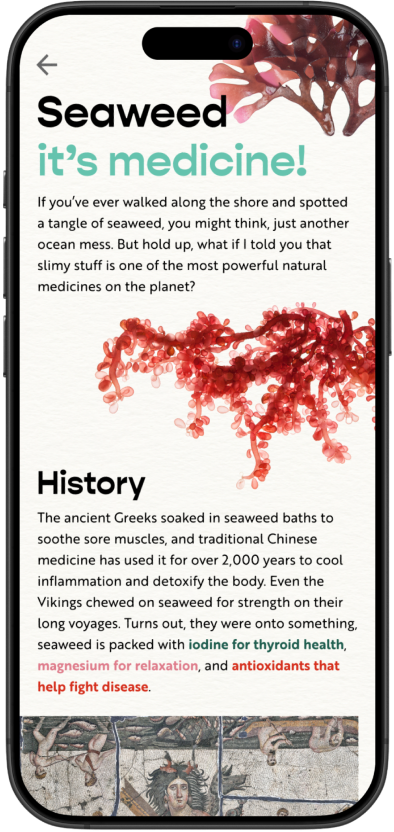
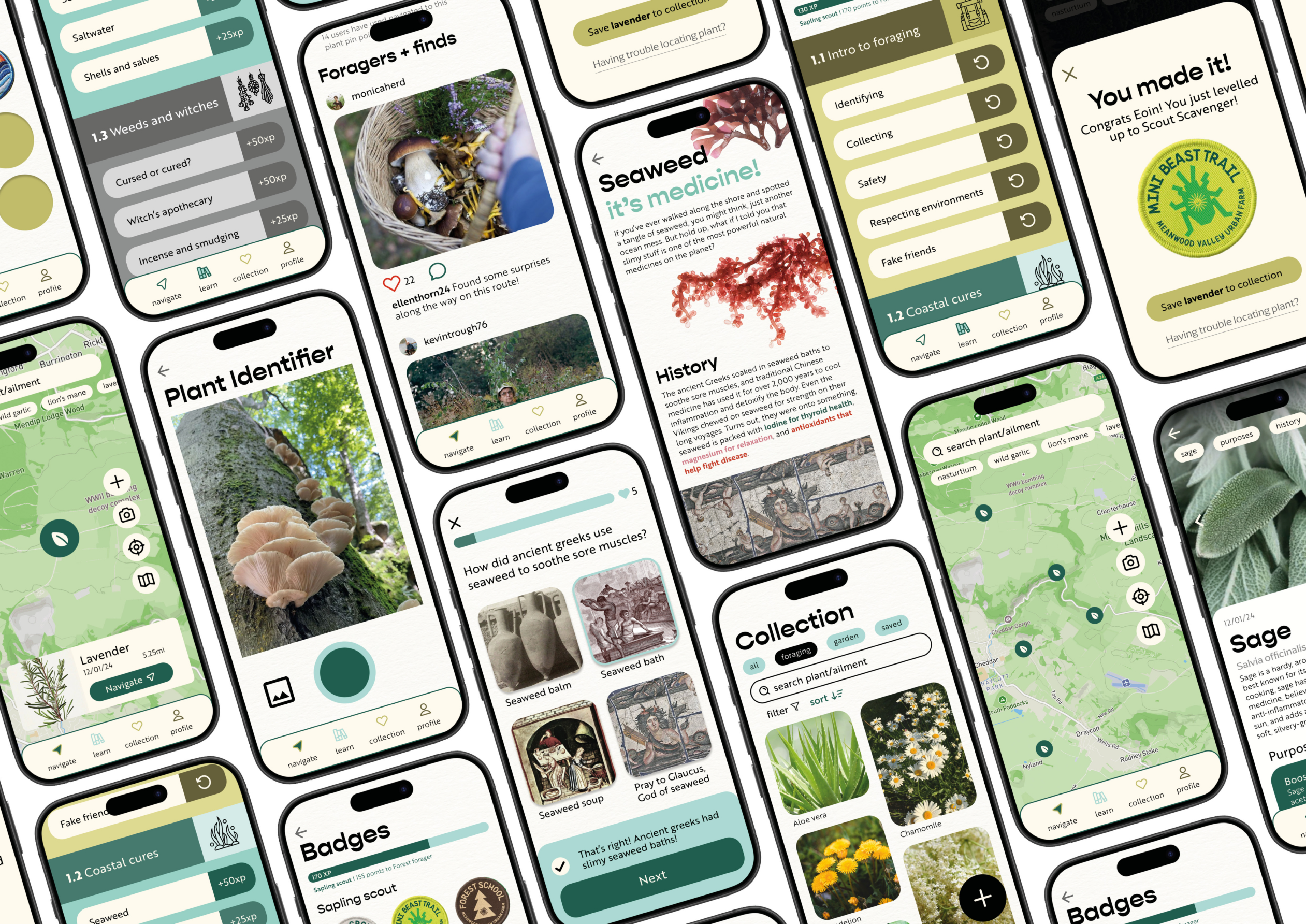
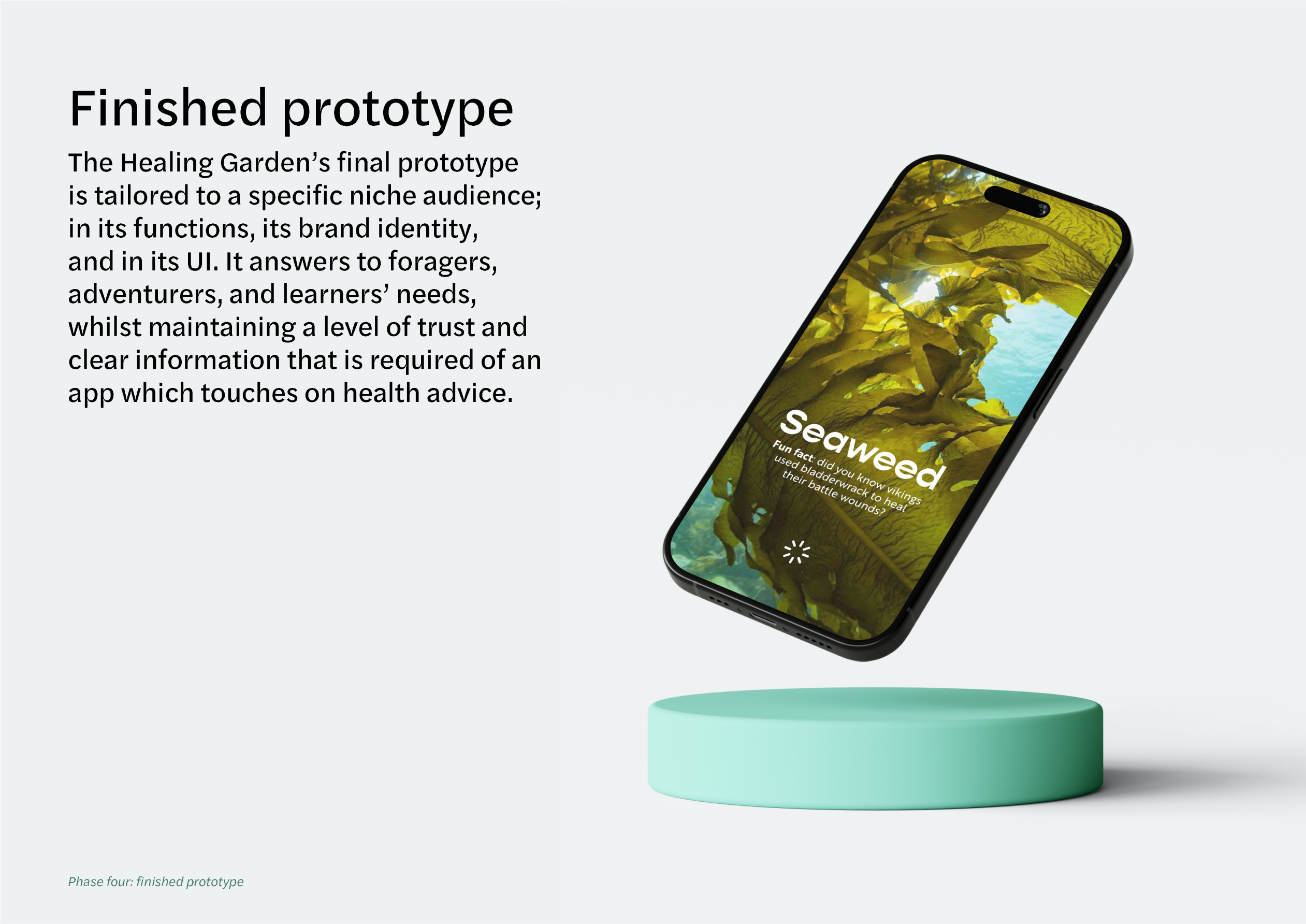
The Healing Garden is a prototype mobile and desktop companion app designed to help foragers find, grow, and use native medicinal plants to benefit their health. It aims to incite curiosity and lust for learning, encourage users to connect with their environment, as well as teaching them how to solve minor ailments via medicinal plants.






Process
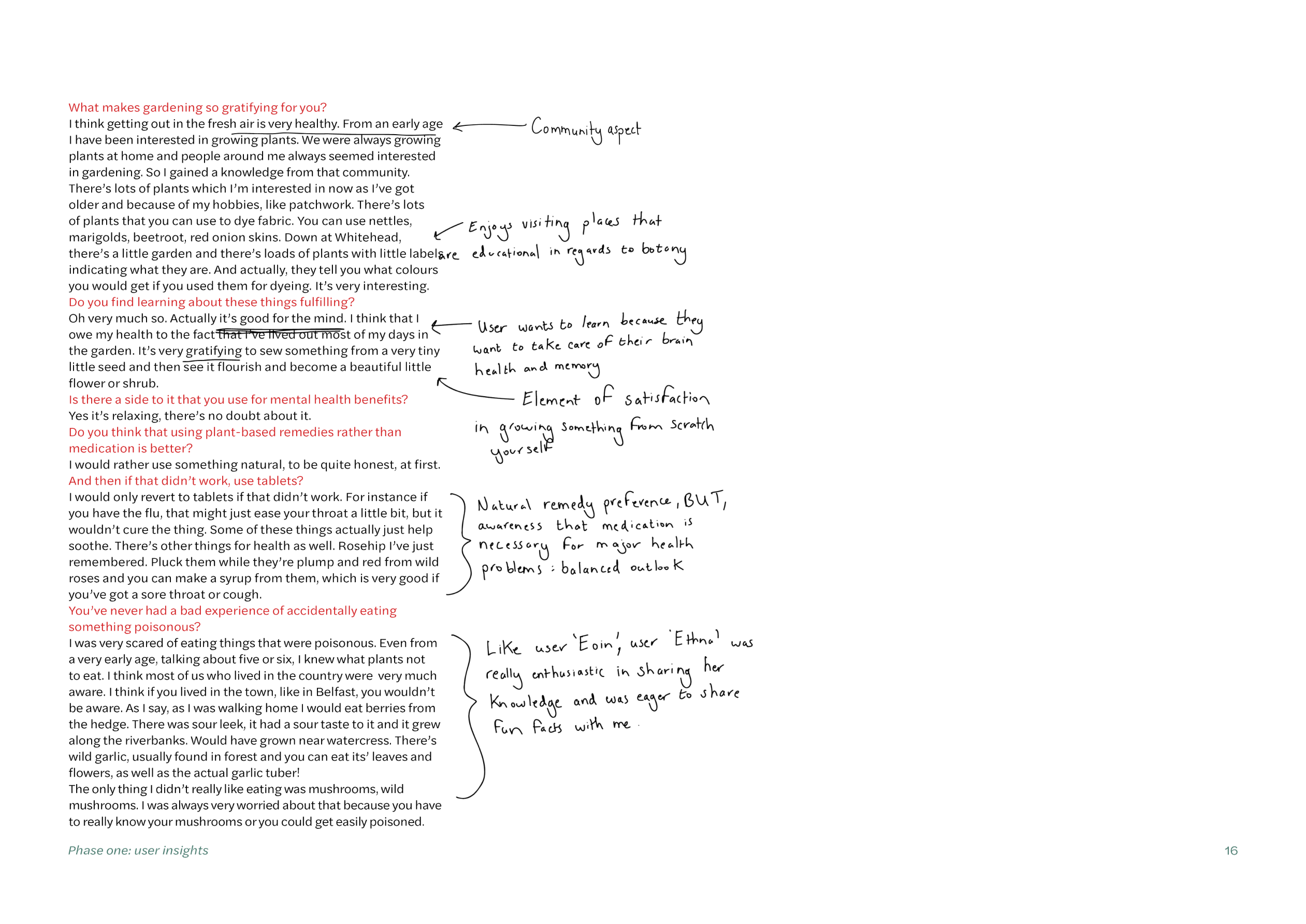
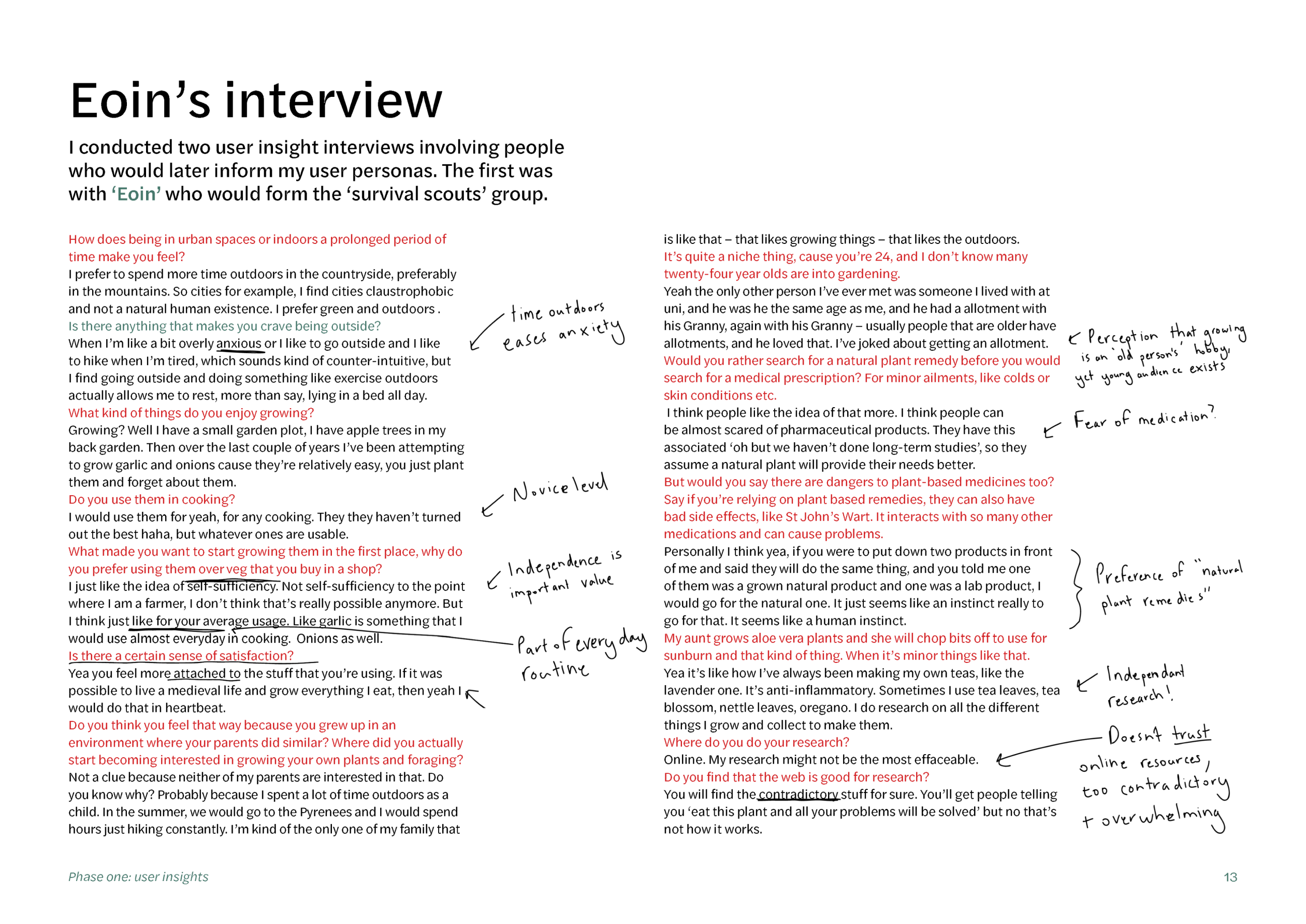
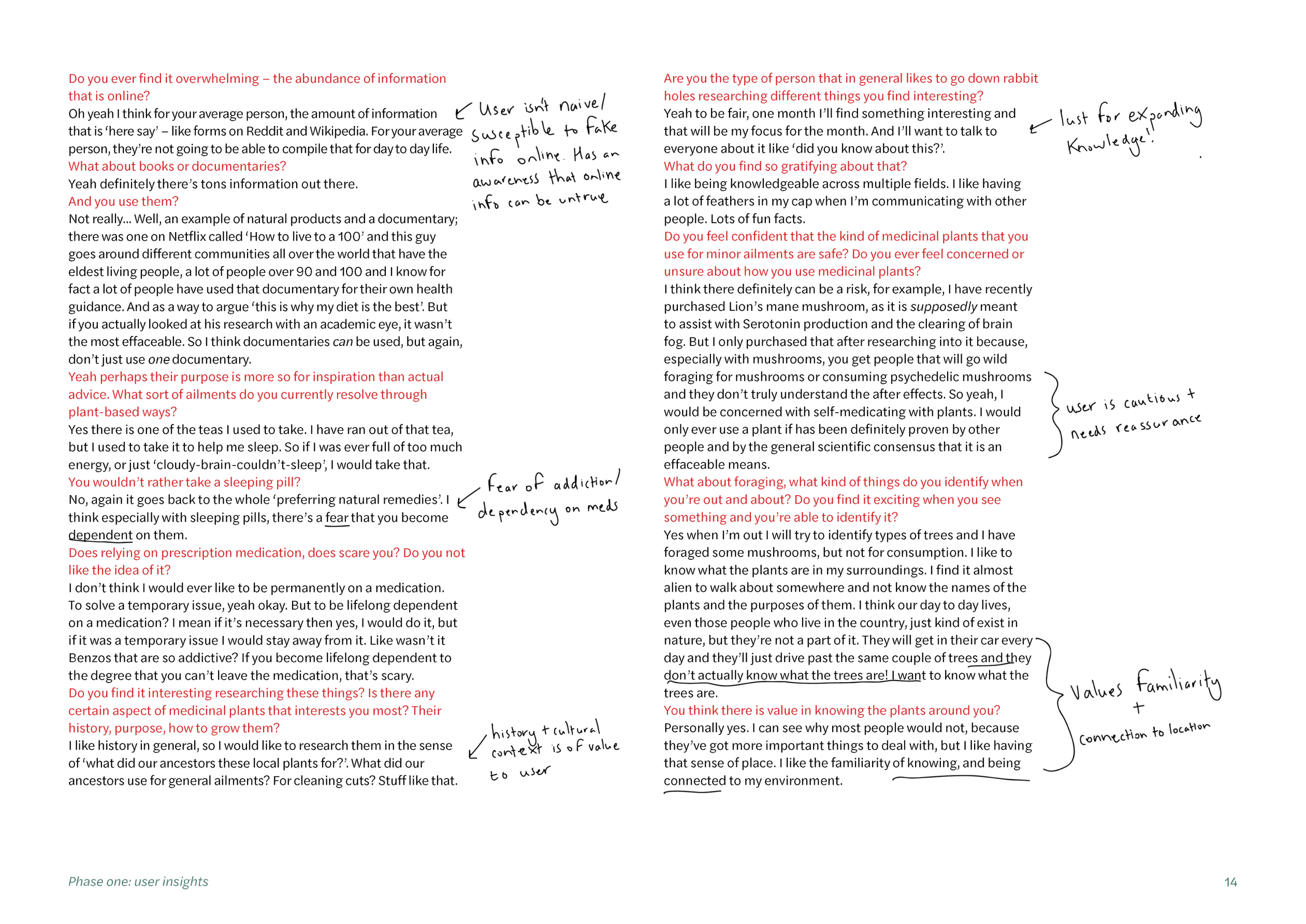
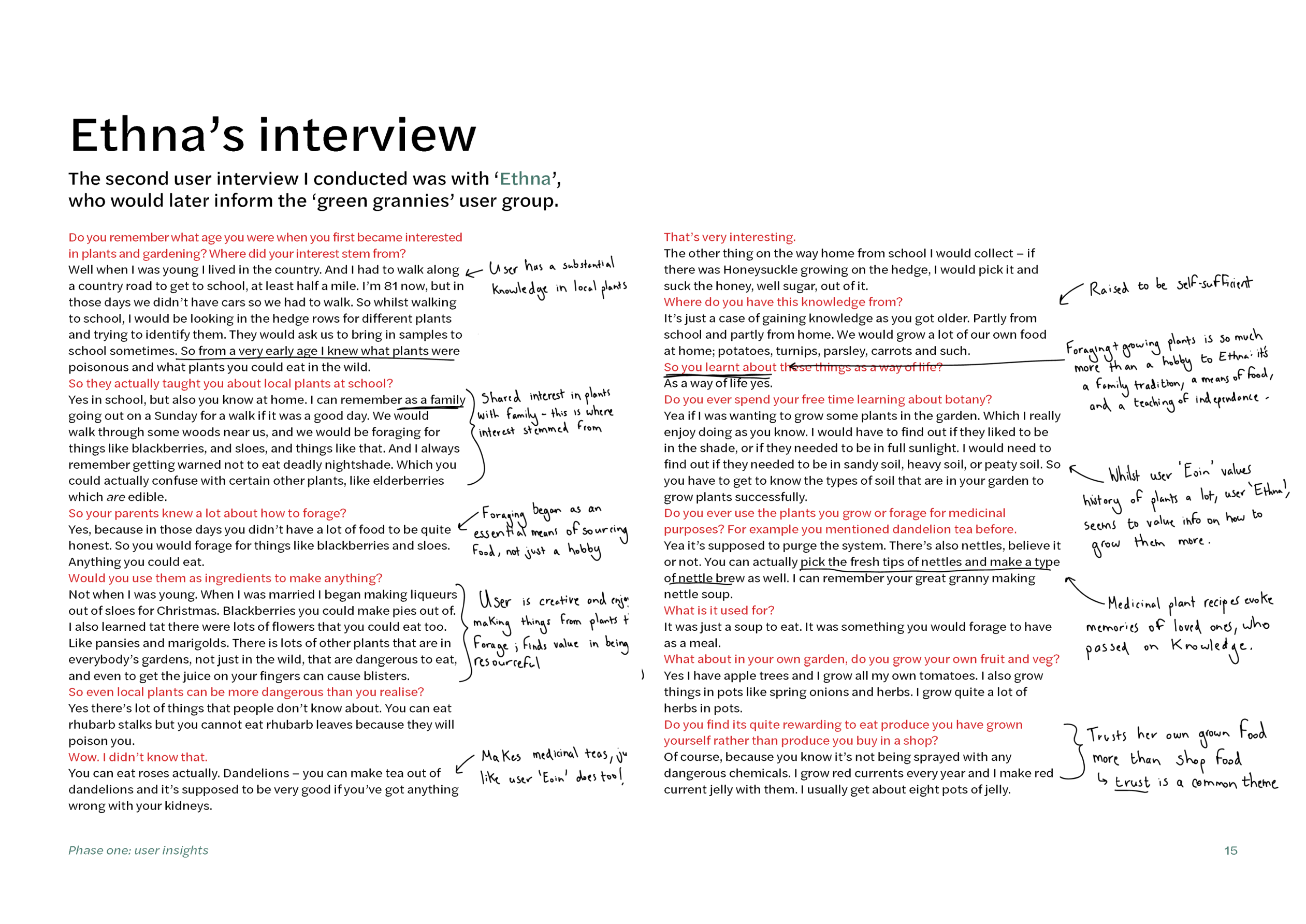
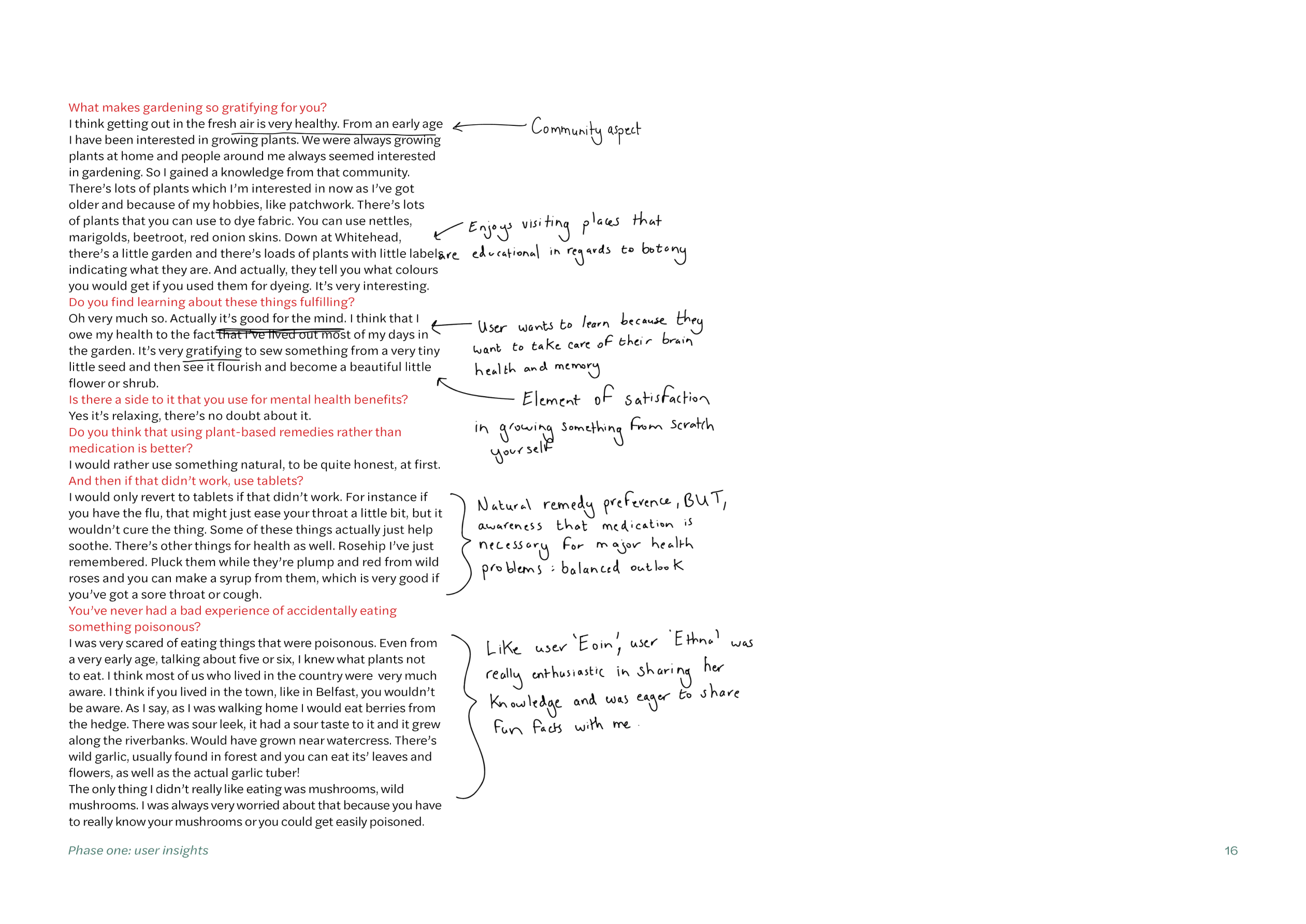
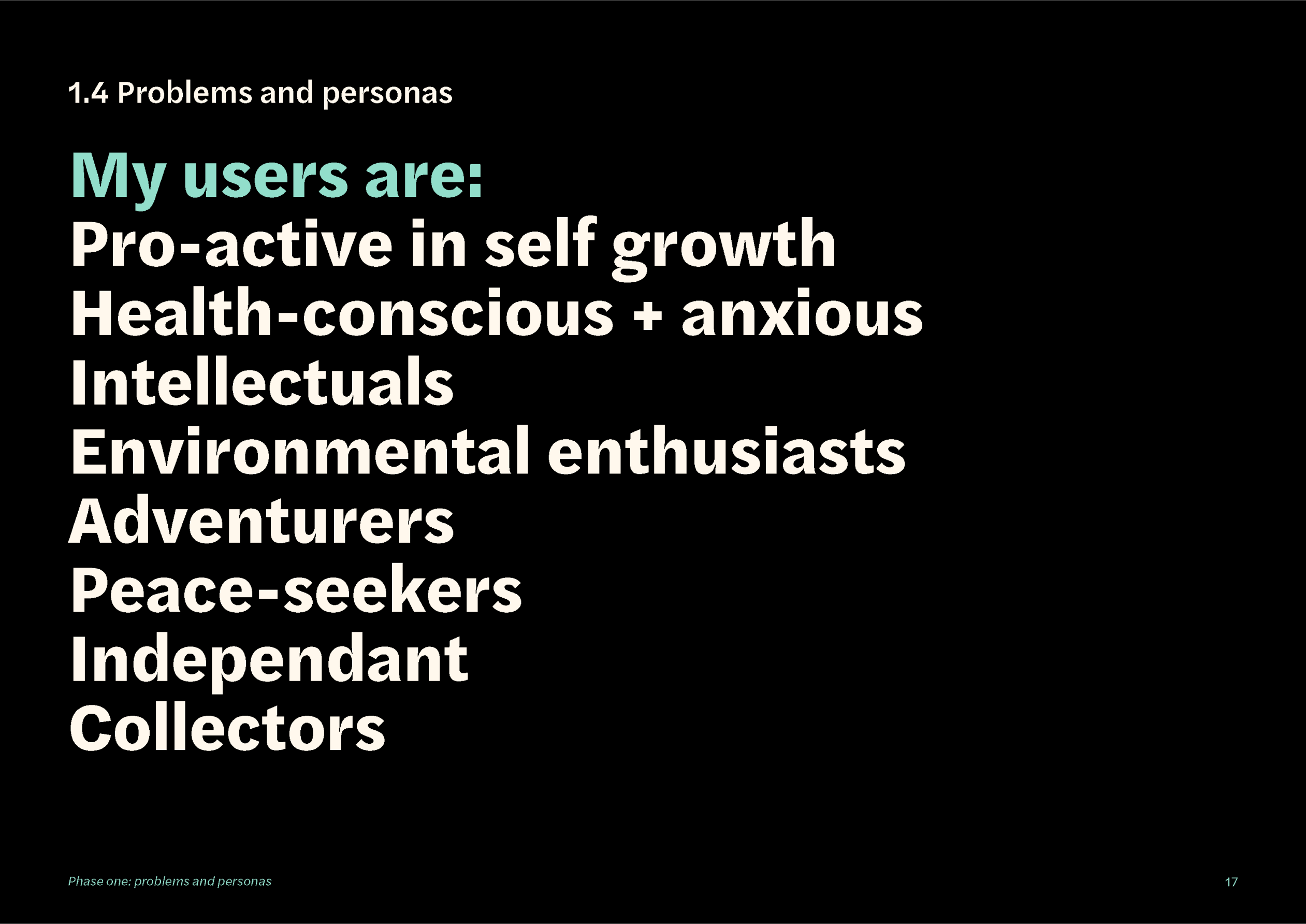
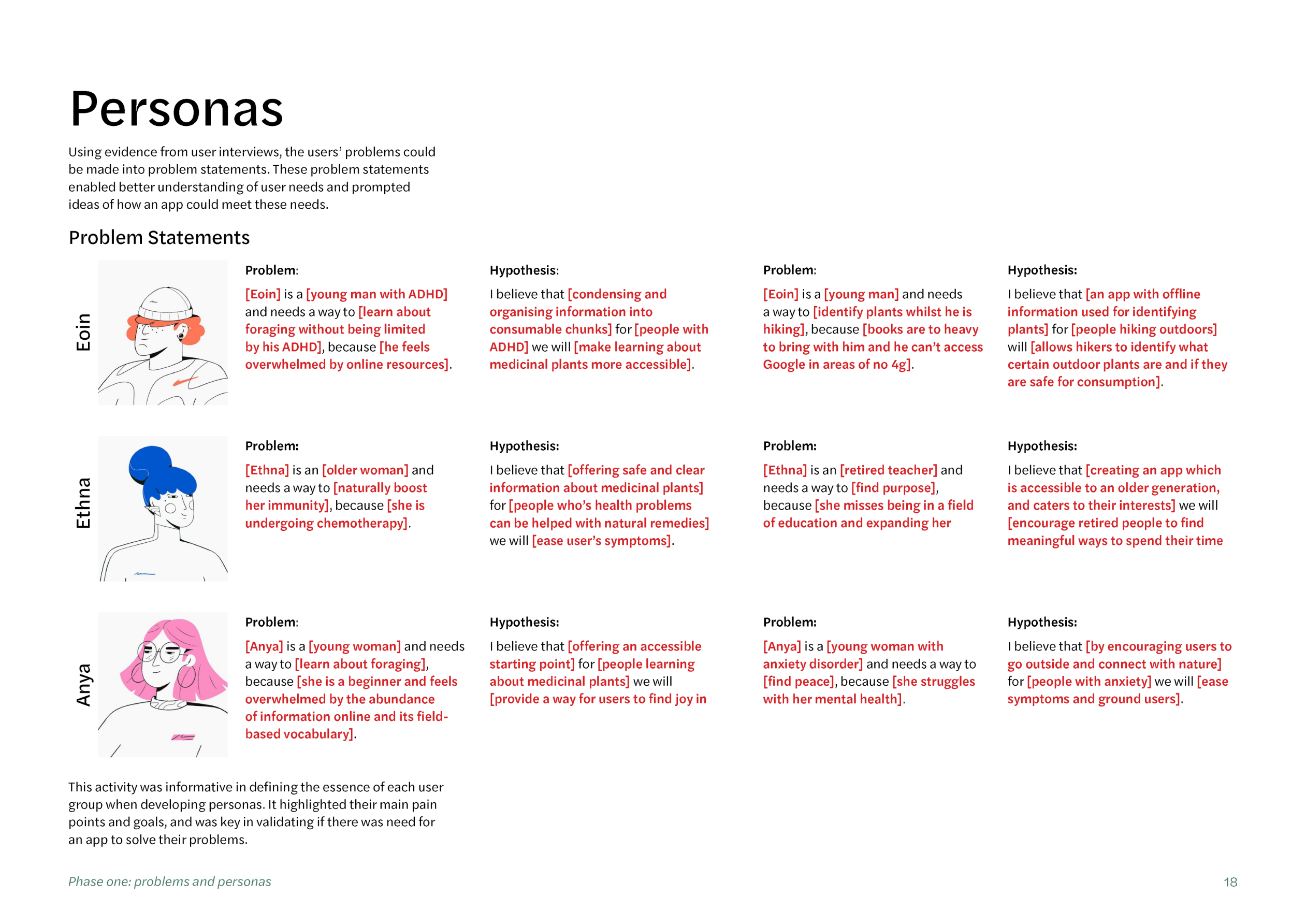
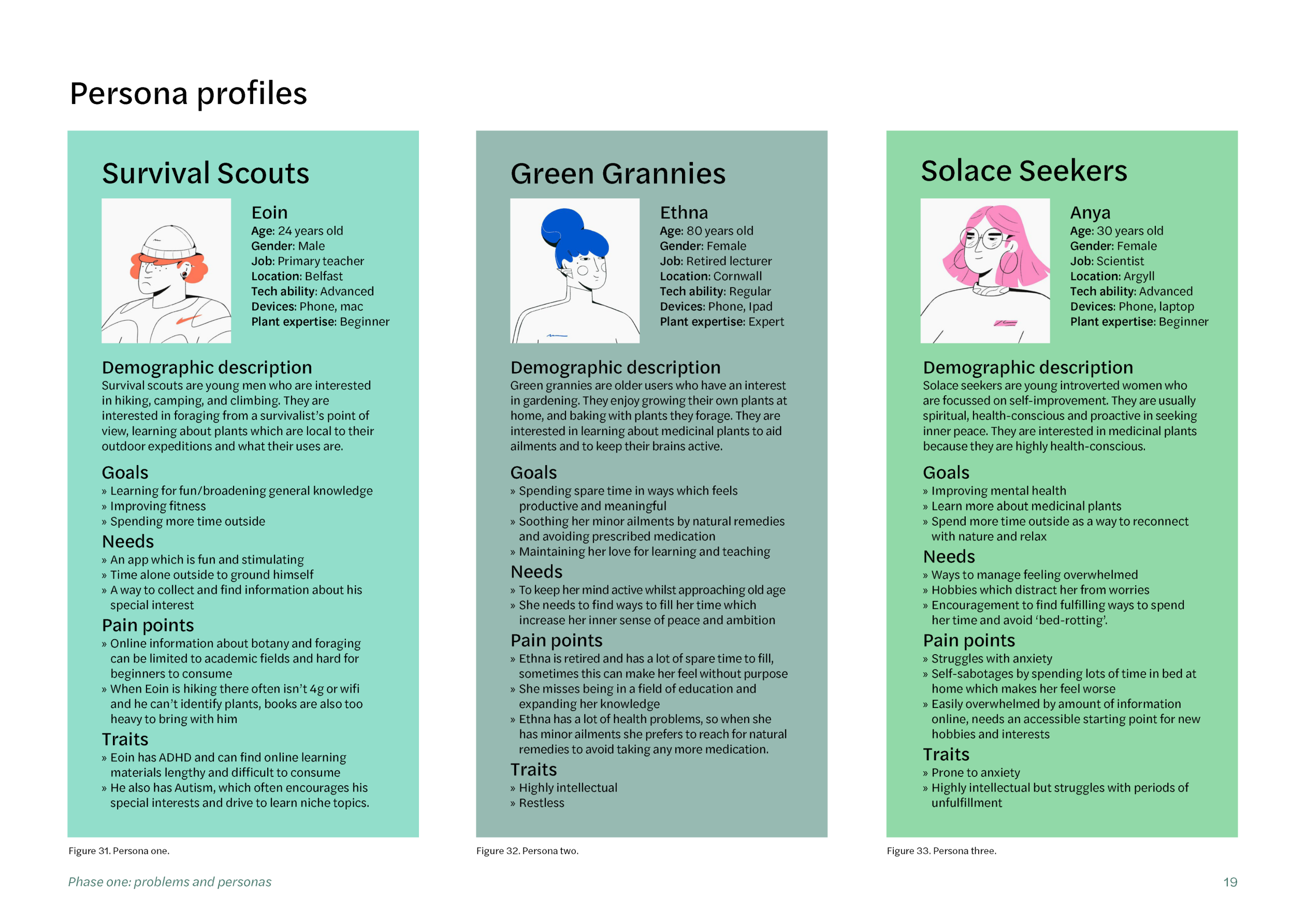
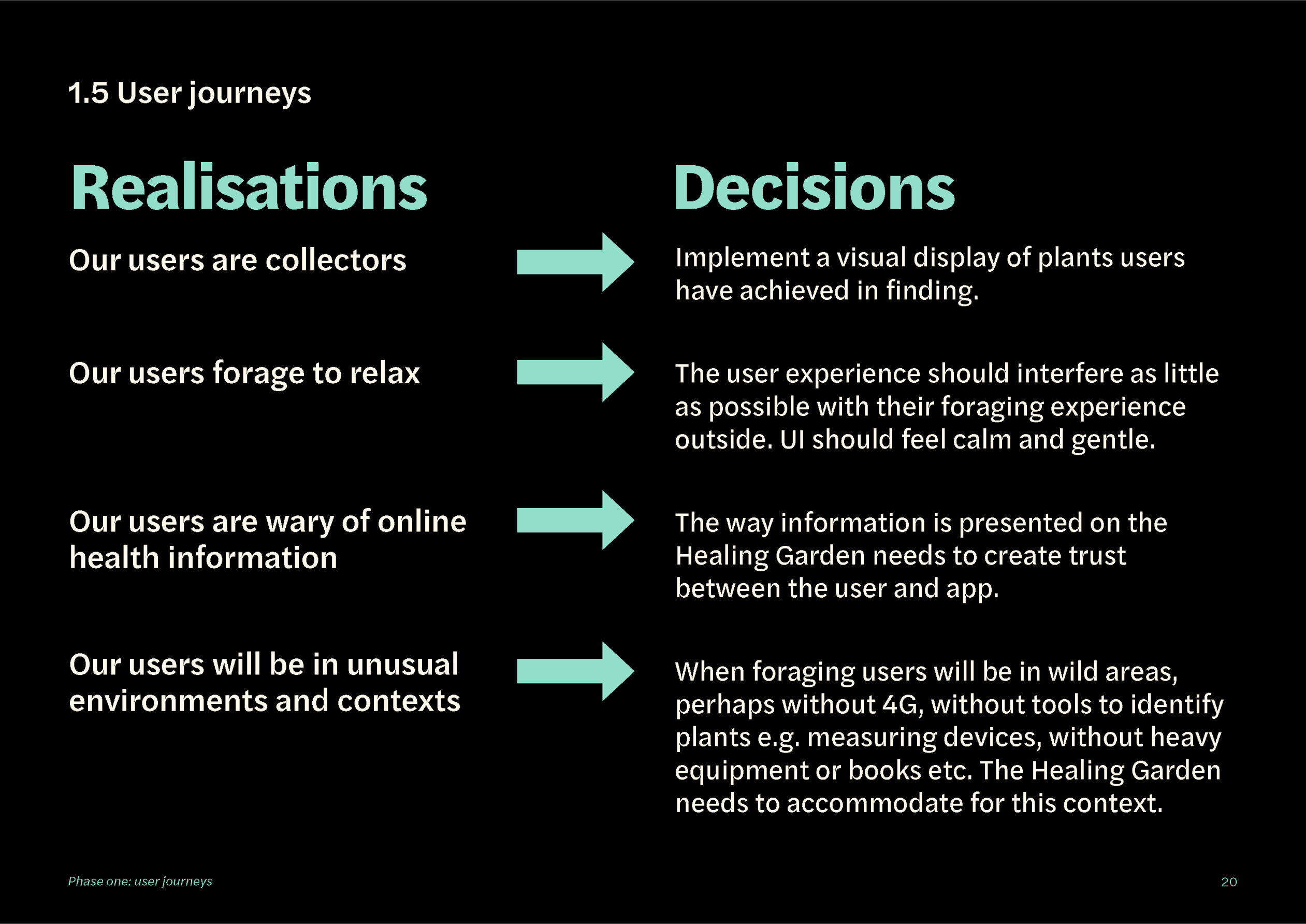
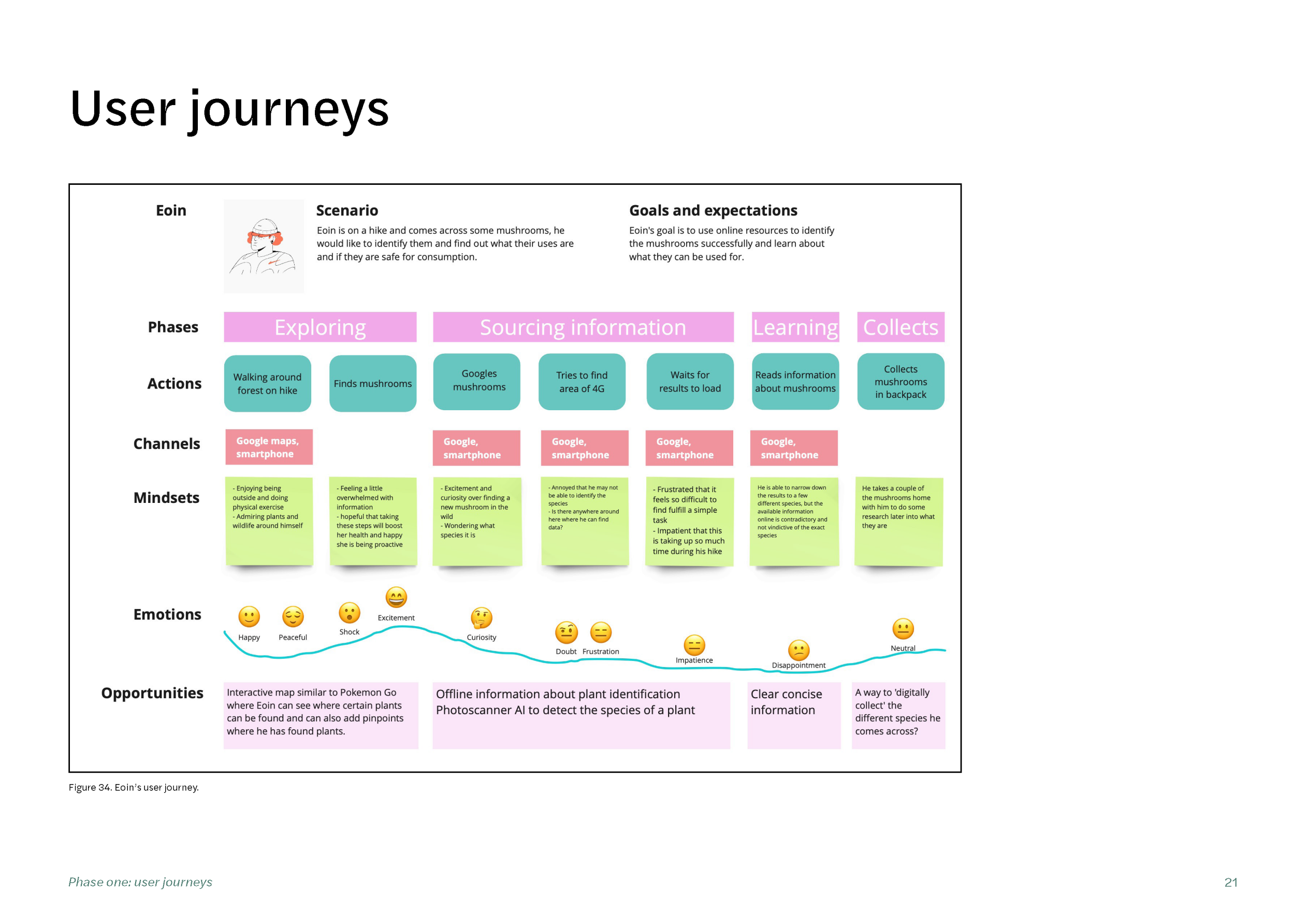
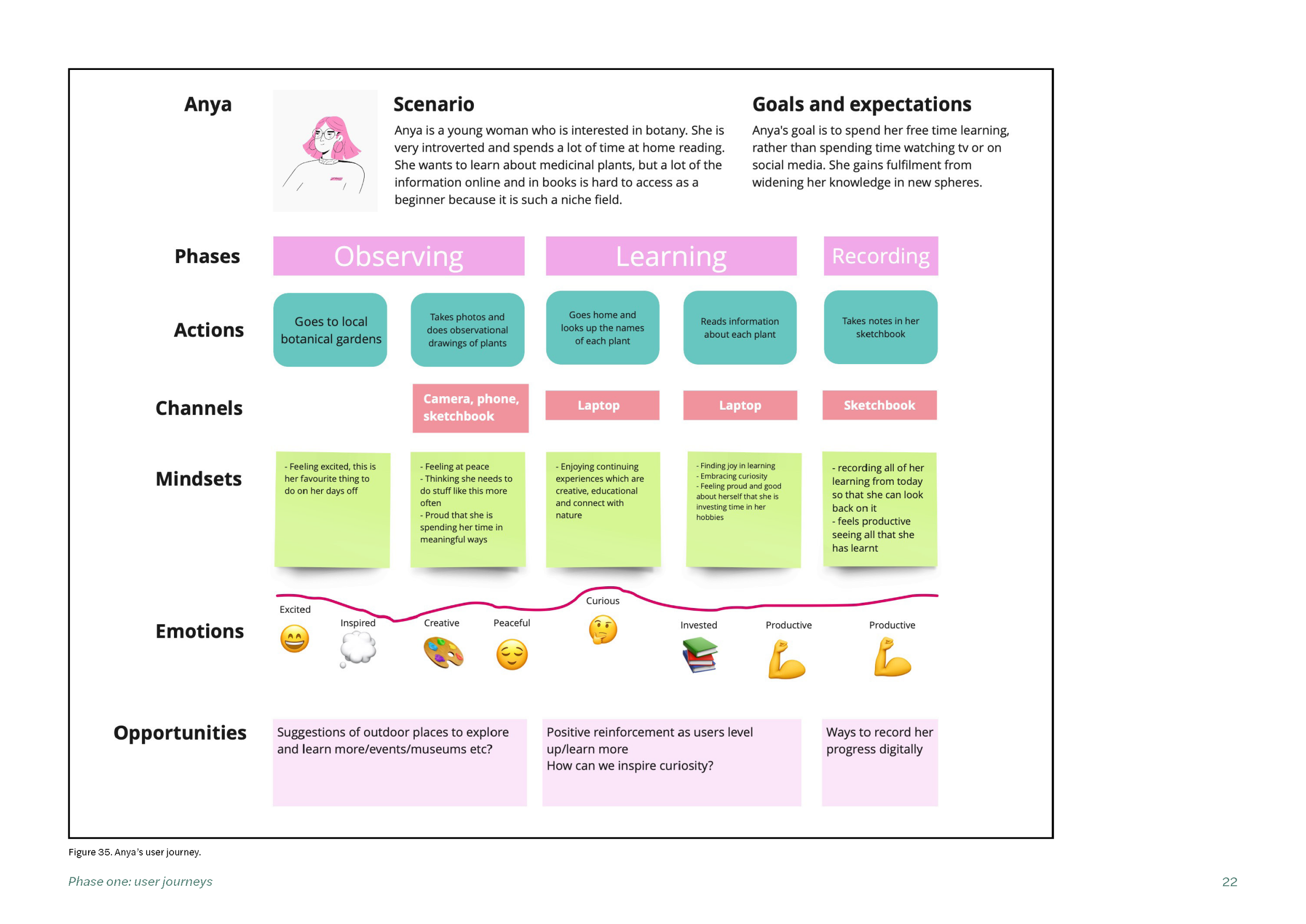
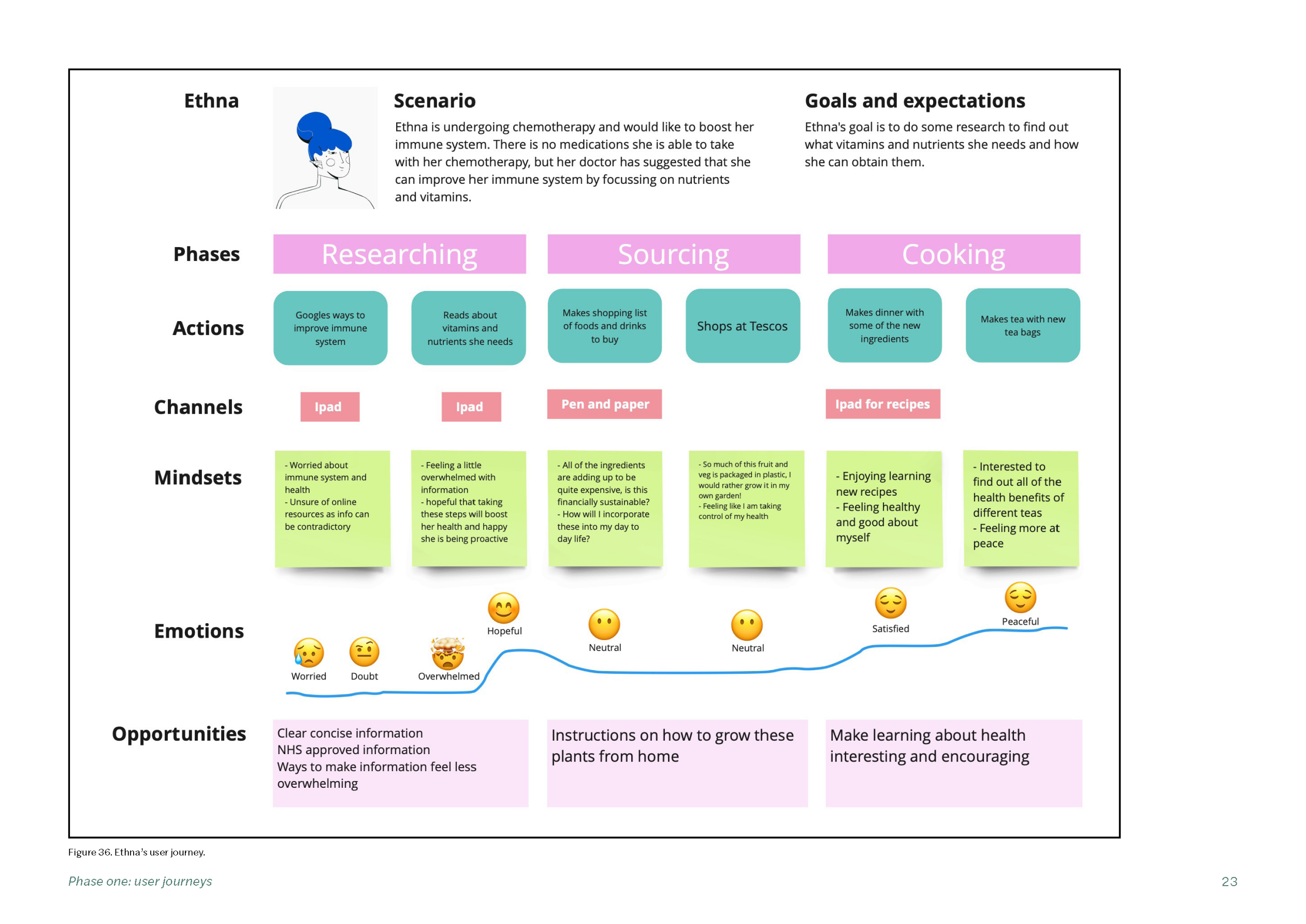
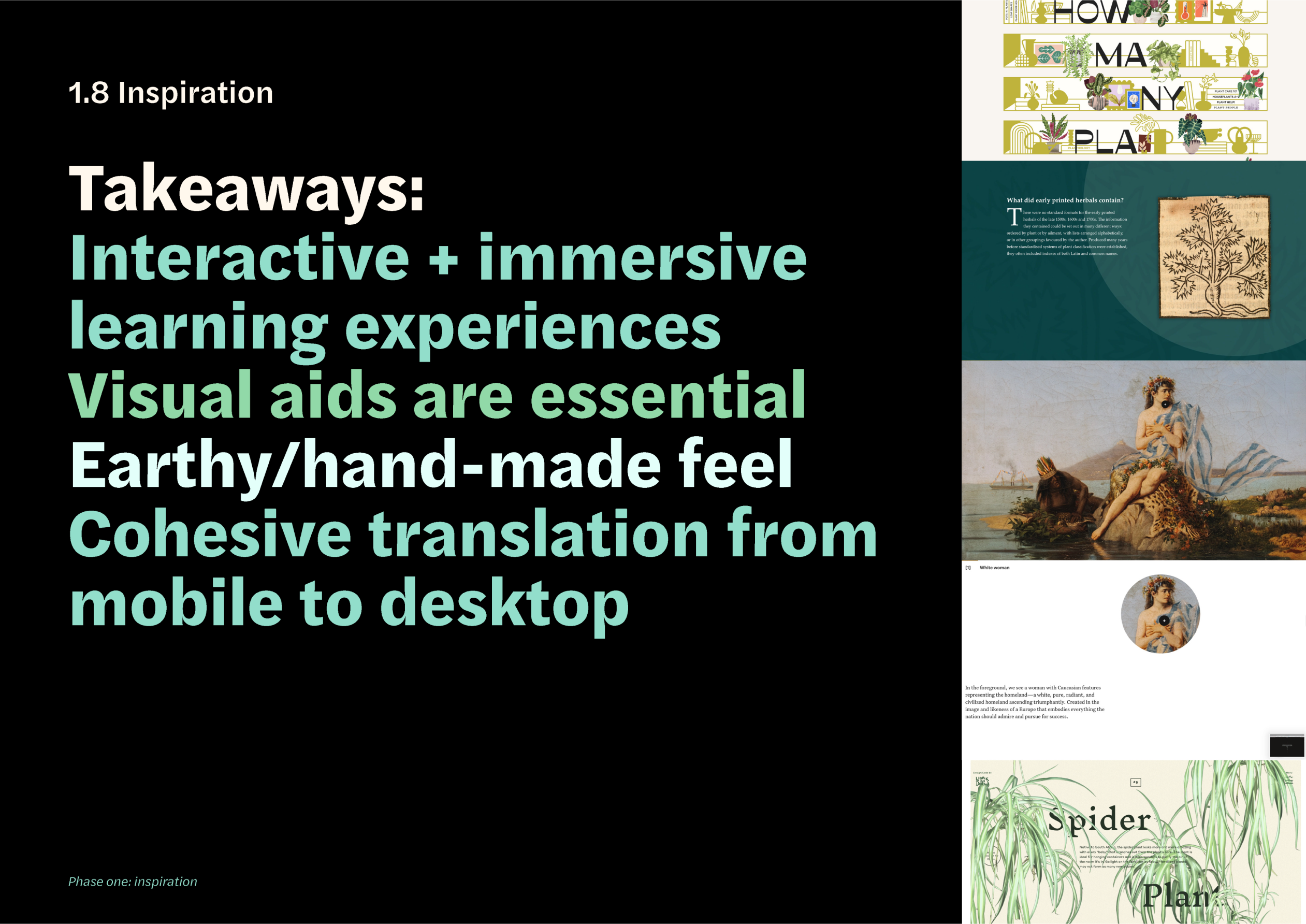
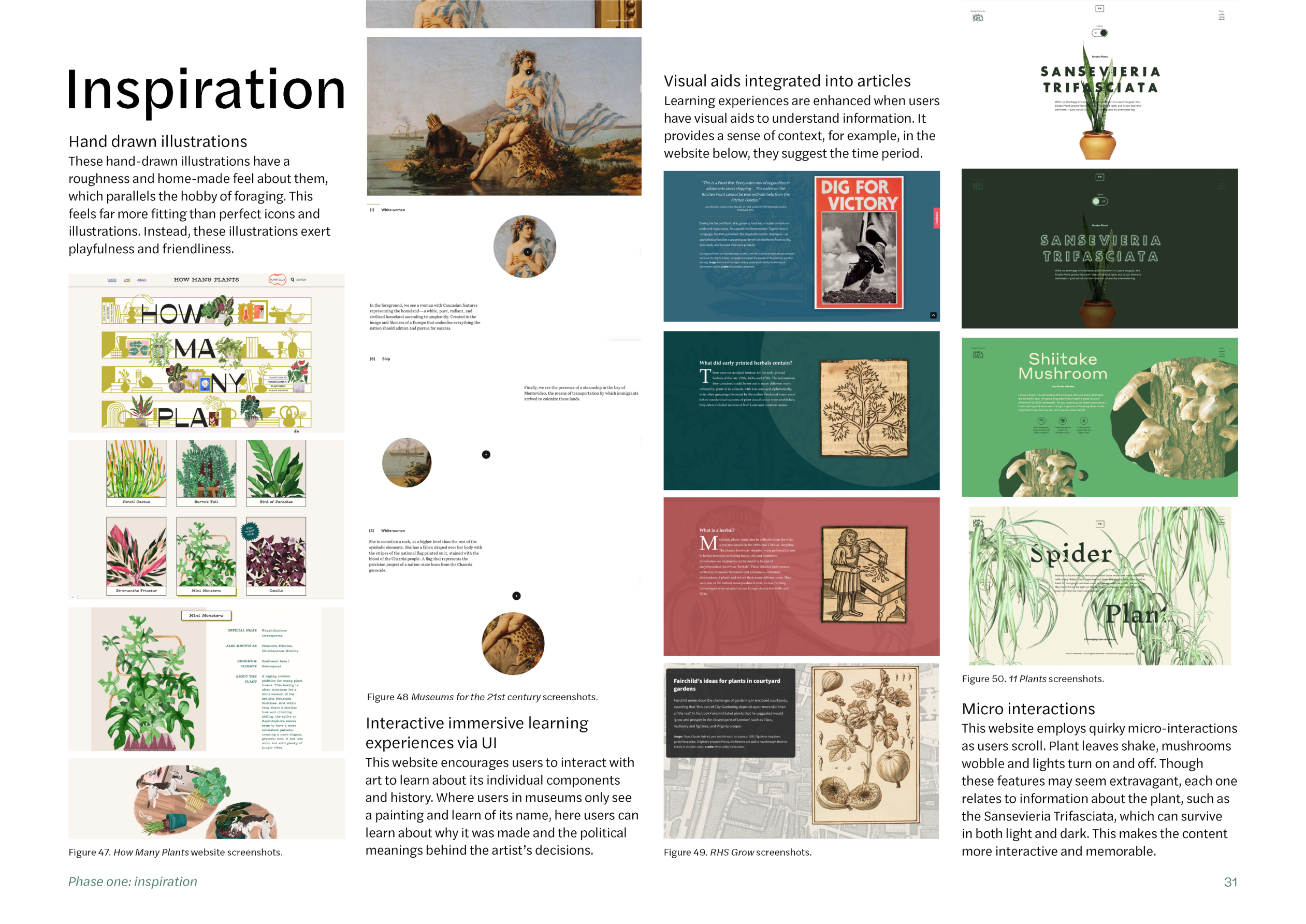
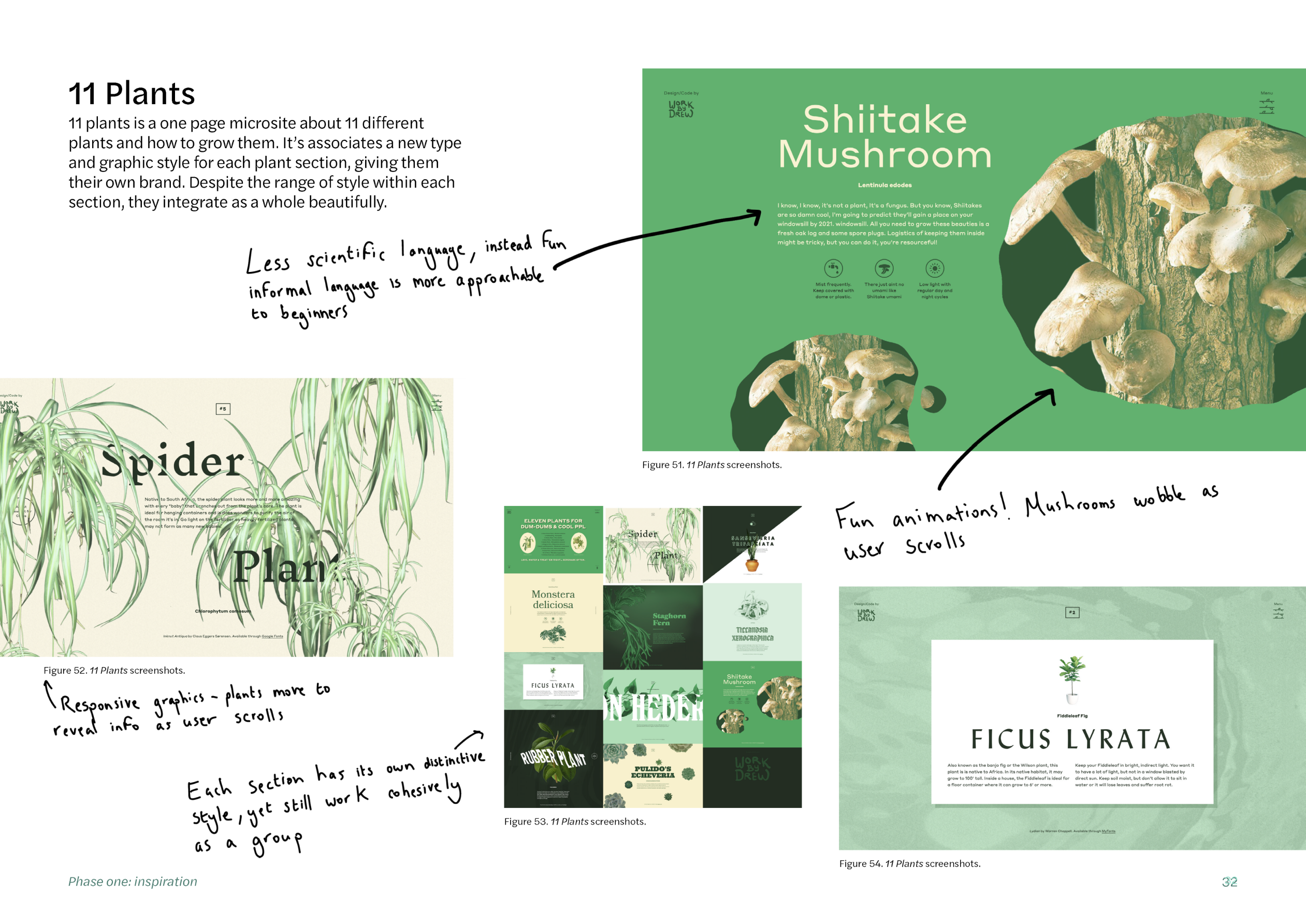
The foundation of the project was extensive user research. Through competitor analysis, persona profiles, user journeys, and in-depth interviews with potential users, I sought to understand not only what users wanted to achieve, but why they were drawn to foraging, gardening, and medicinal plants in the first place. A recurring insight was that users were highly motivated by learning, yet often felt overwhelmed by the abundance of information available online.
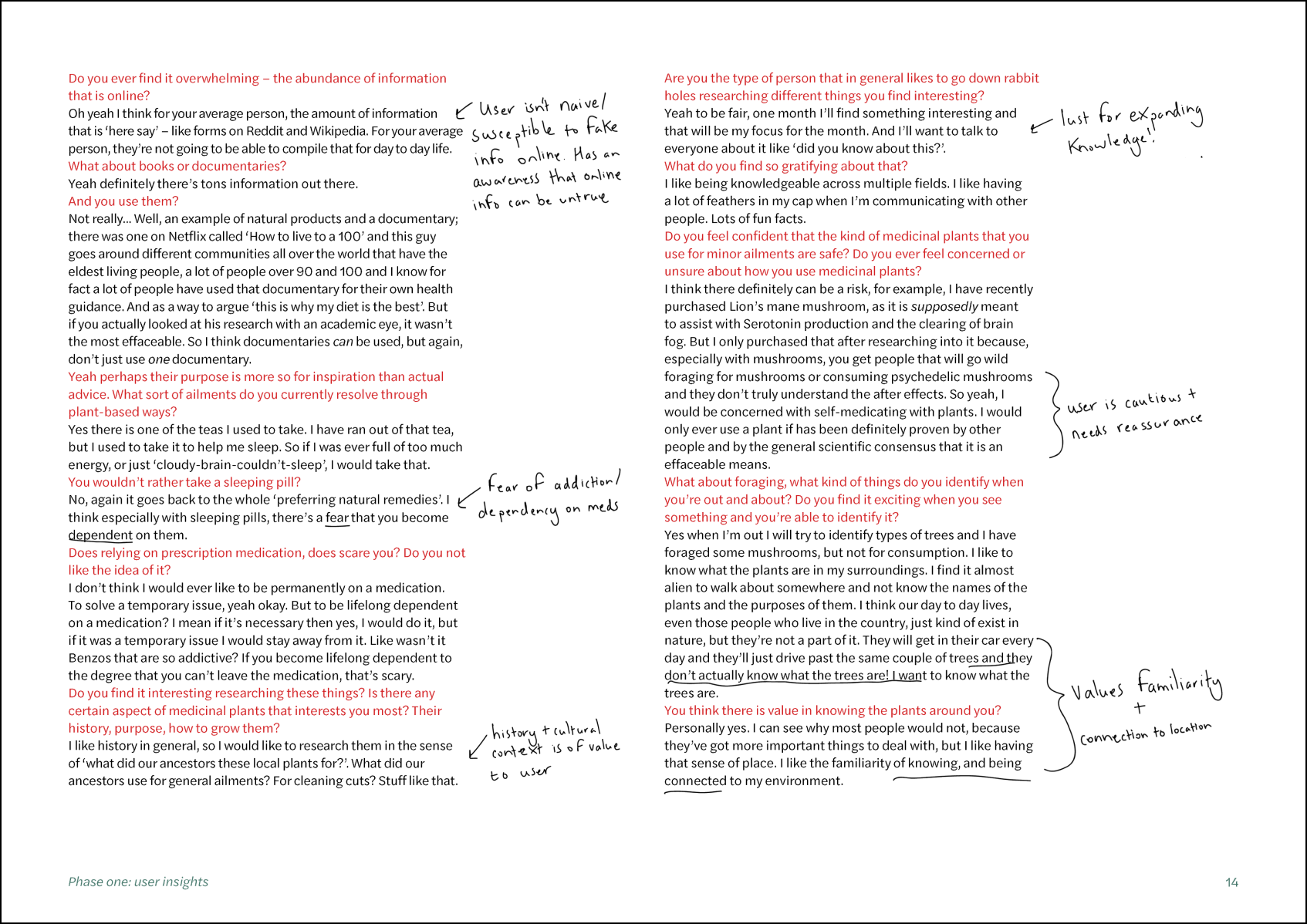
Figure 1. An excerpt from one of the user interviews.
“
For your average person, they're not going to be able to compile that [botany information] for day-to-day life.”
Competitors tend to information dump!
Let's fix that...
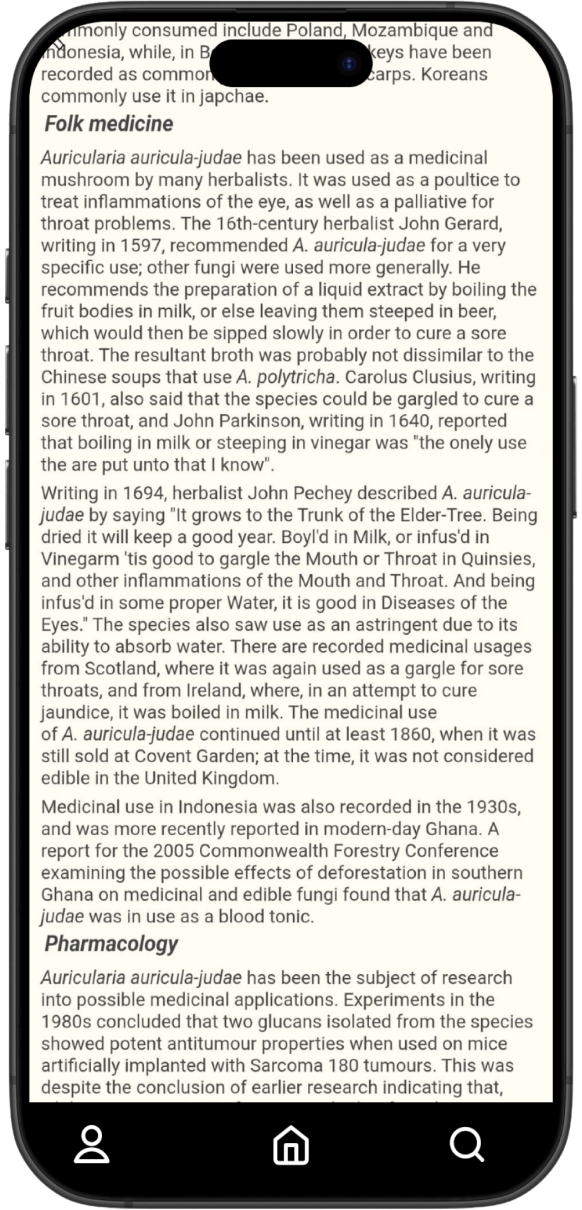
Figure 2. Shroomify, a competitor app
plant ID page.
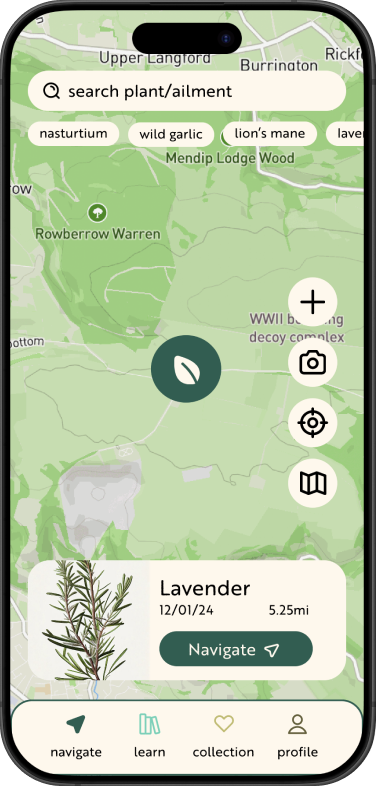
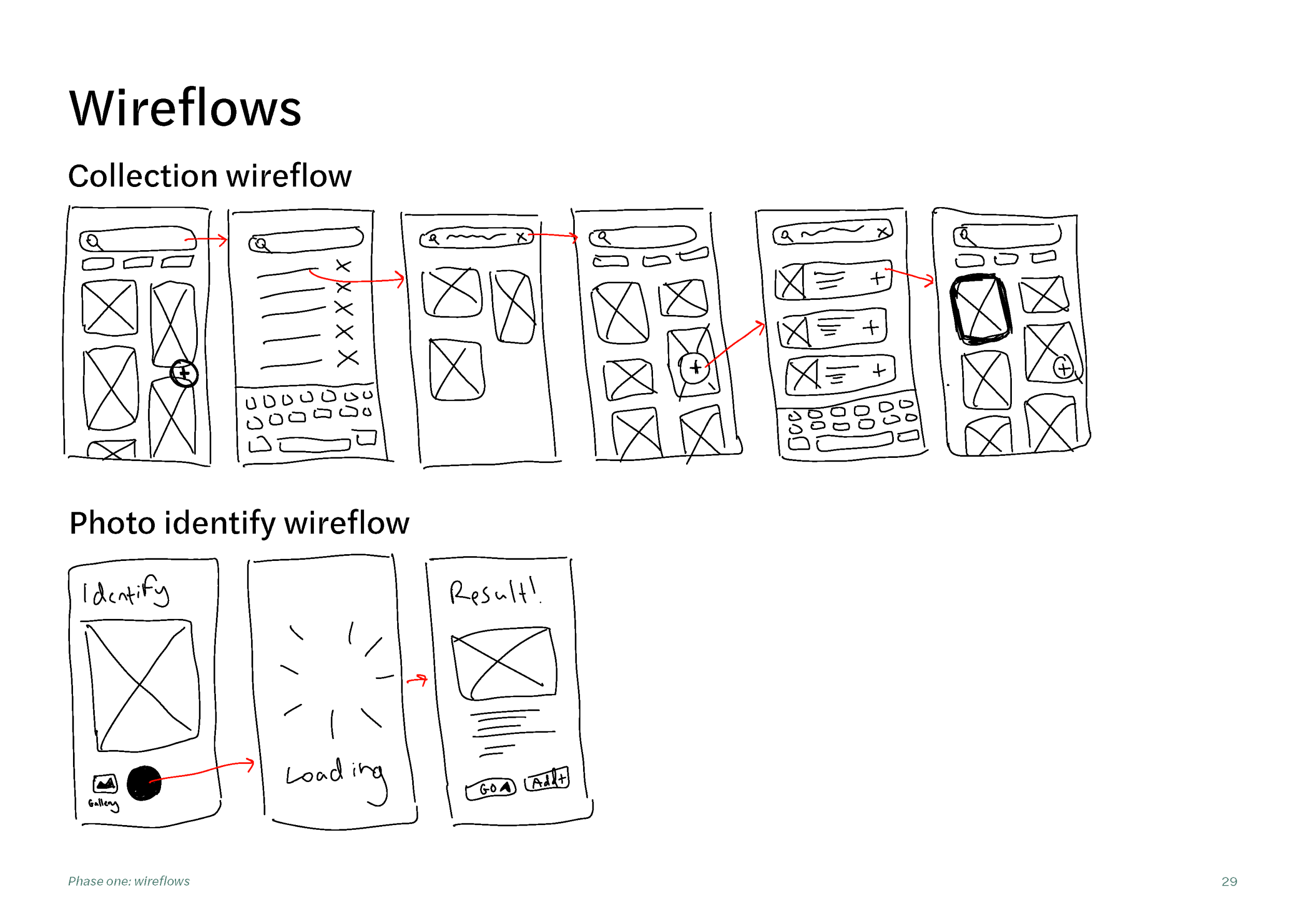
Figure 3. The Healing Garden’s plant
ID page.
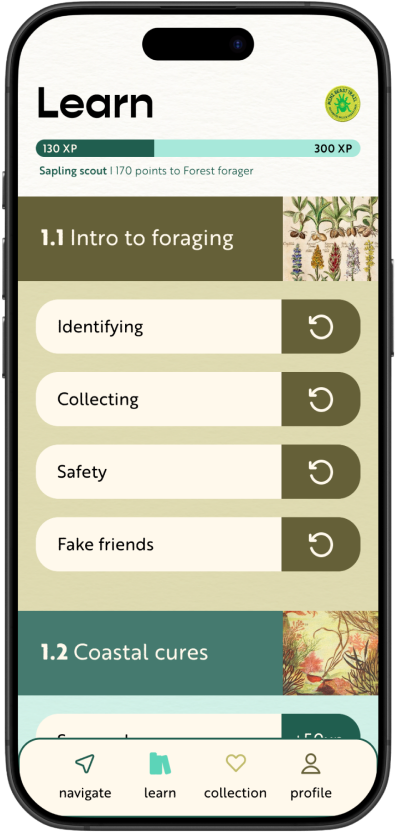
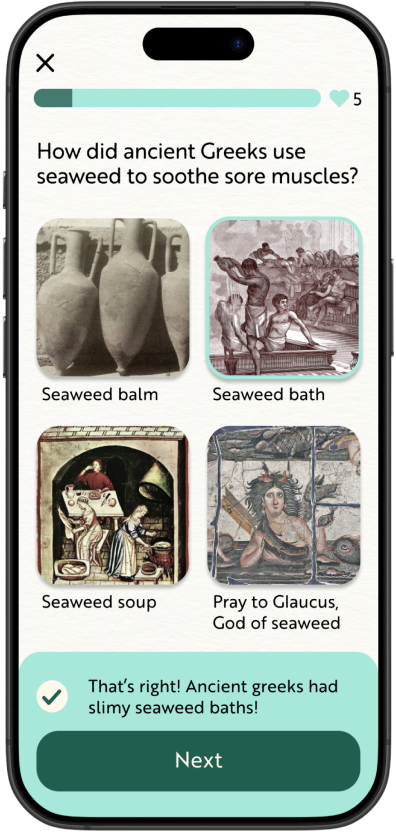
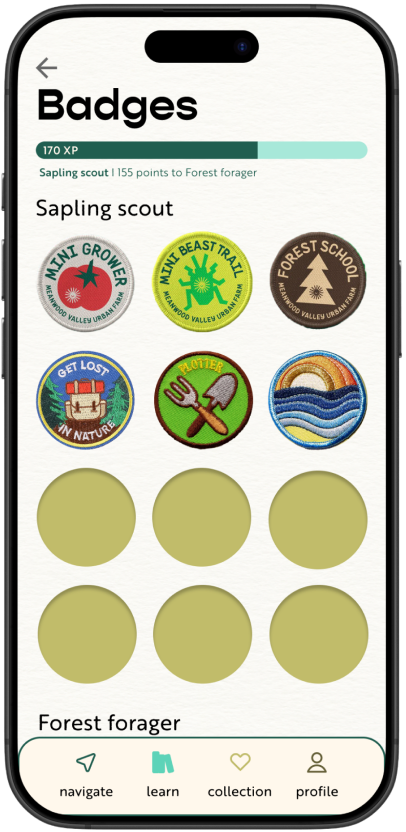
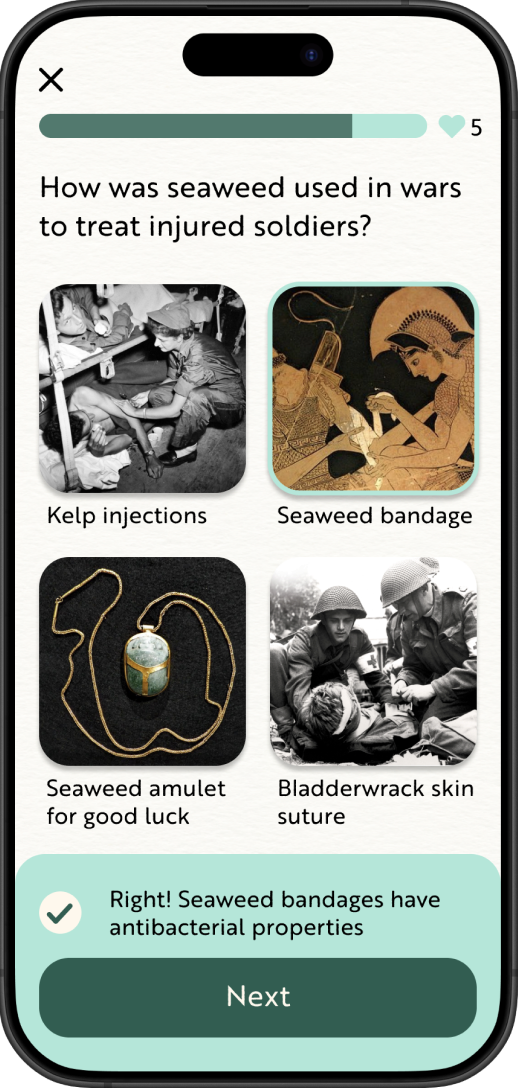
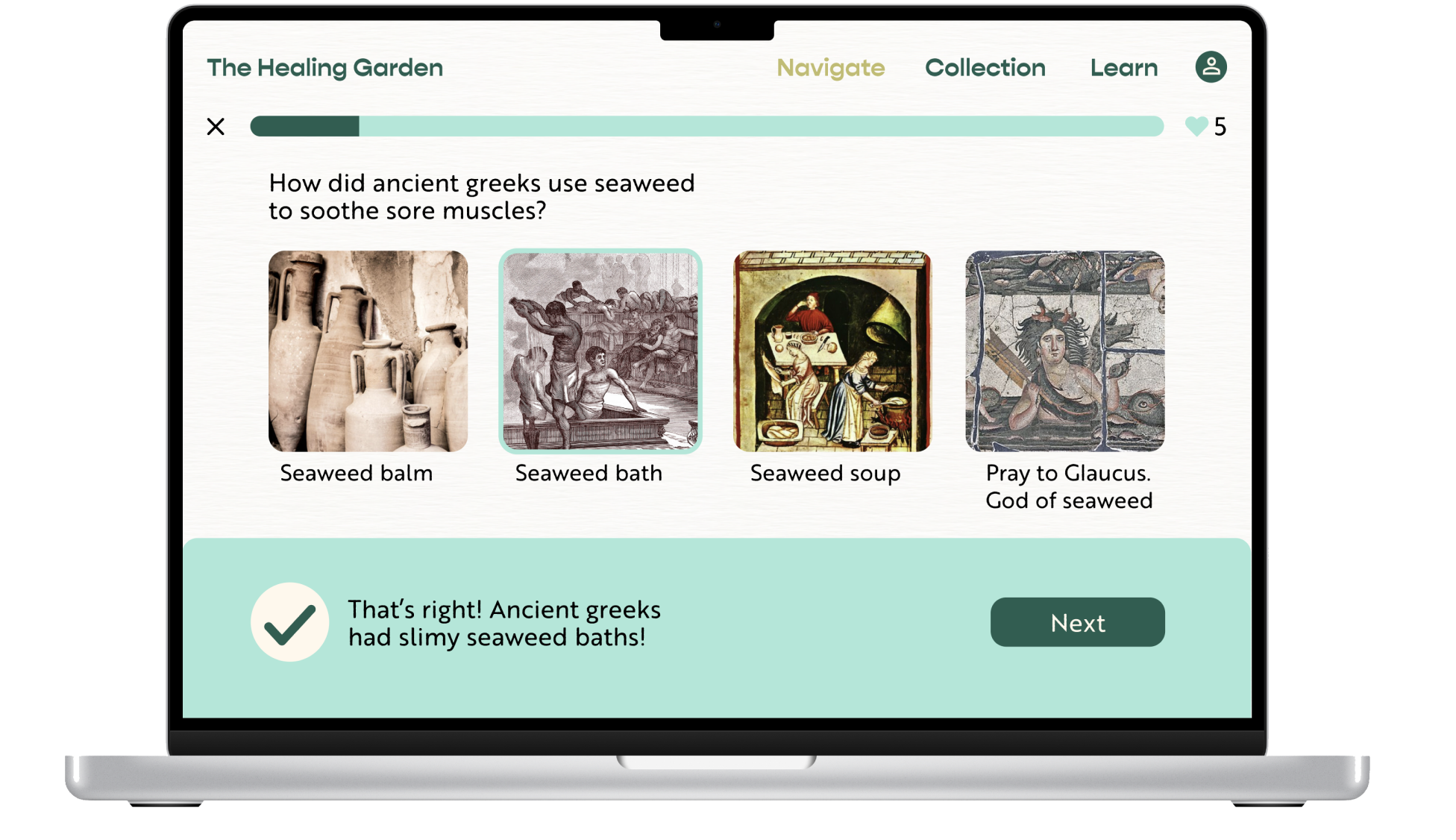
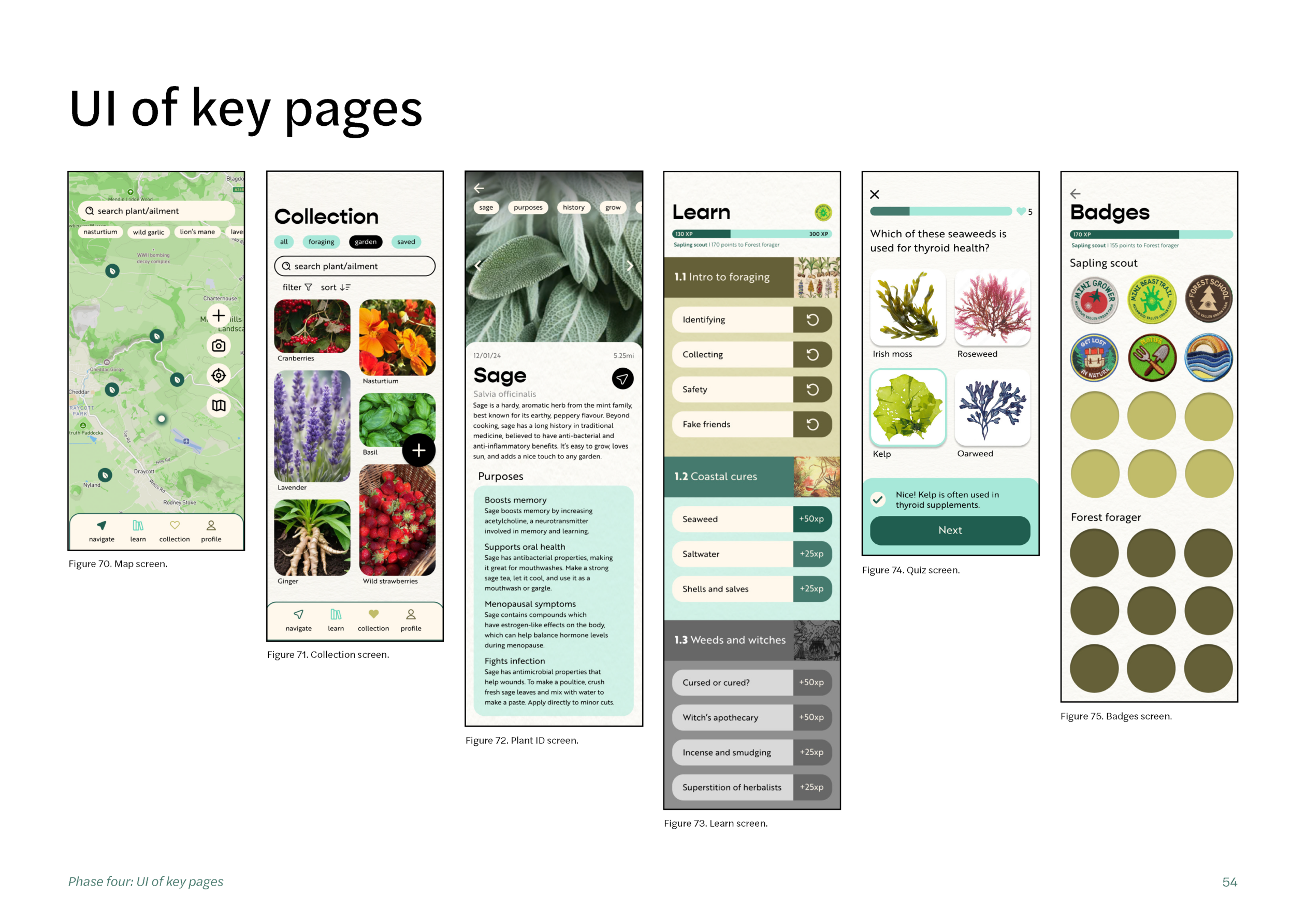
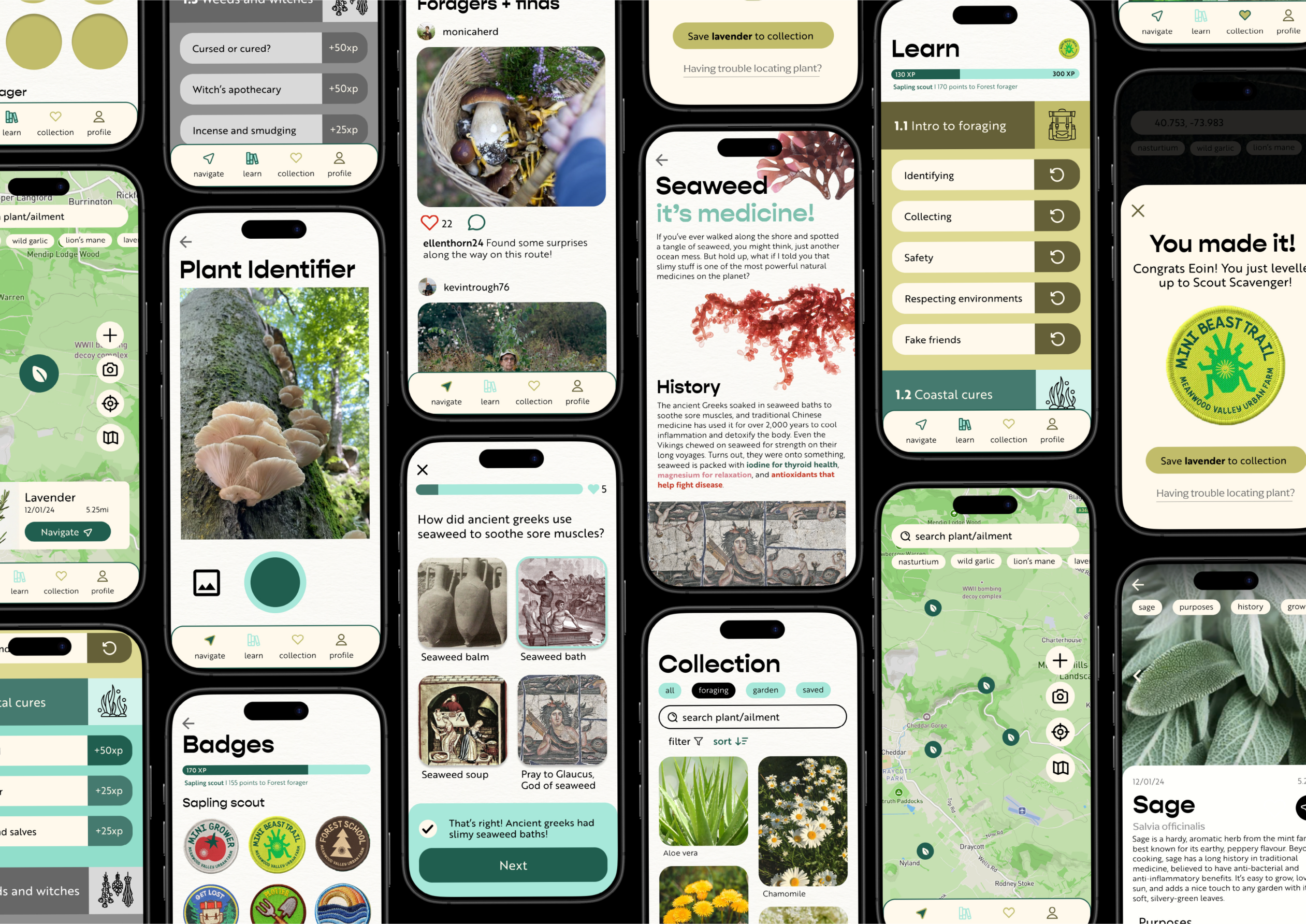
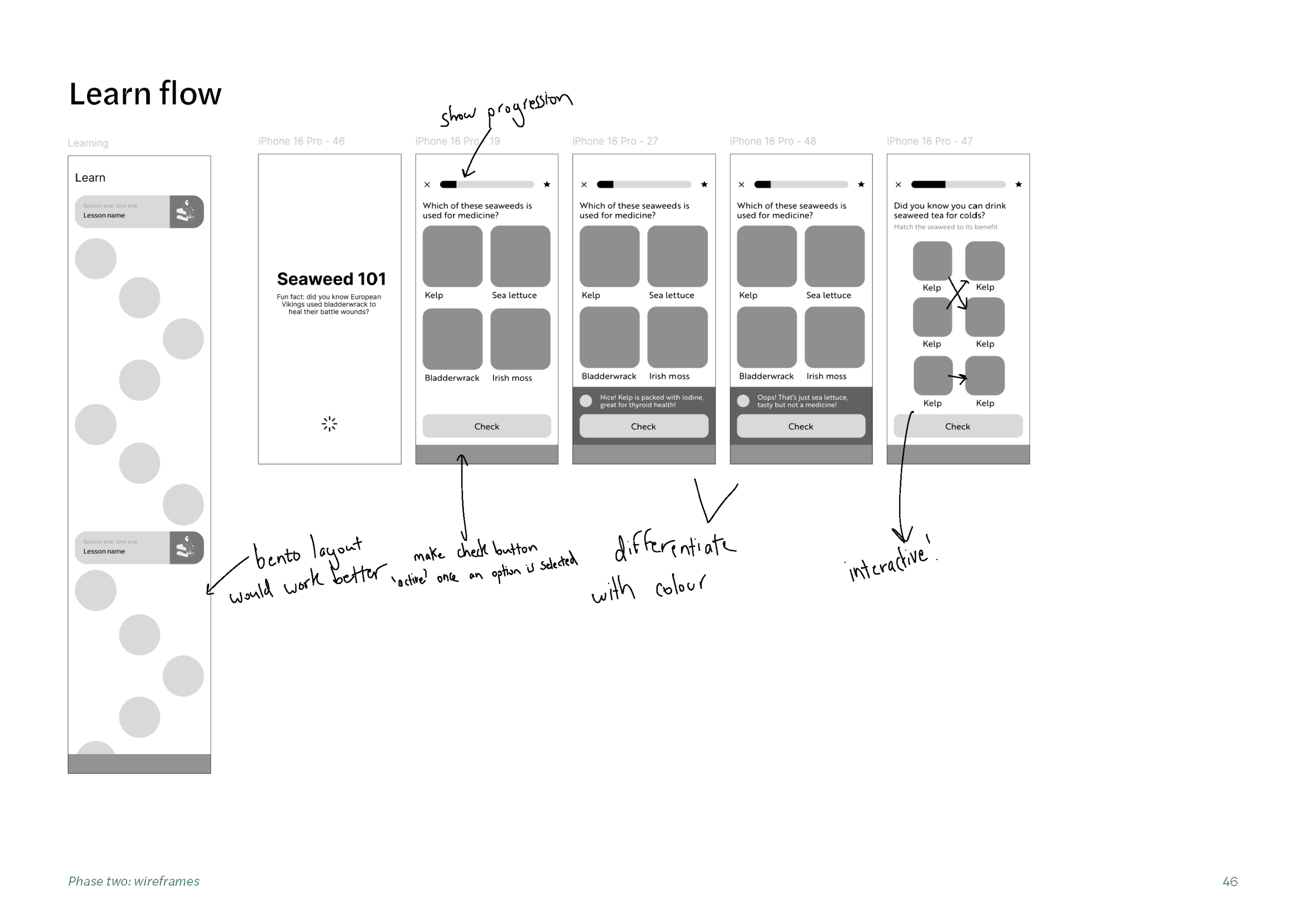
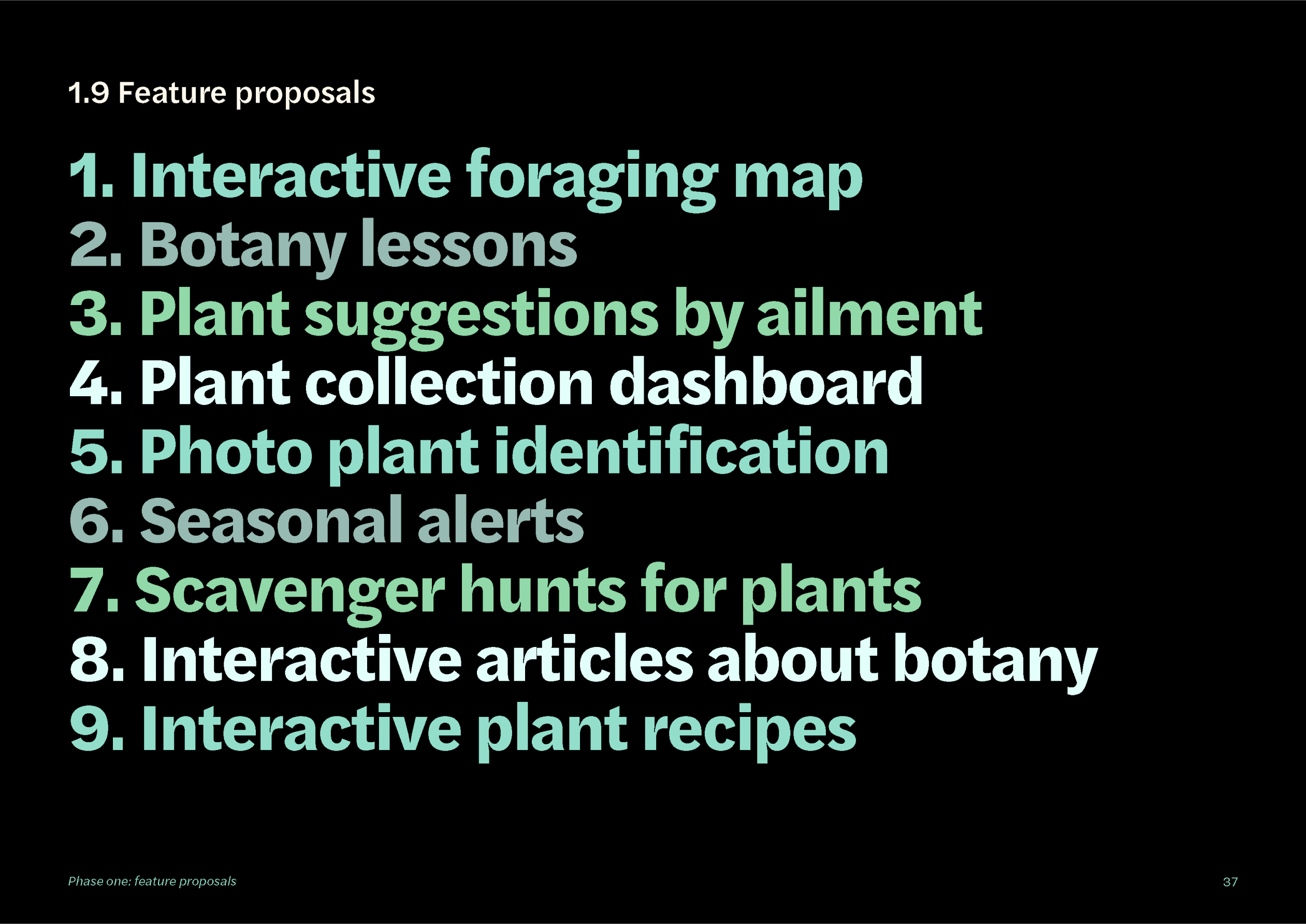
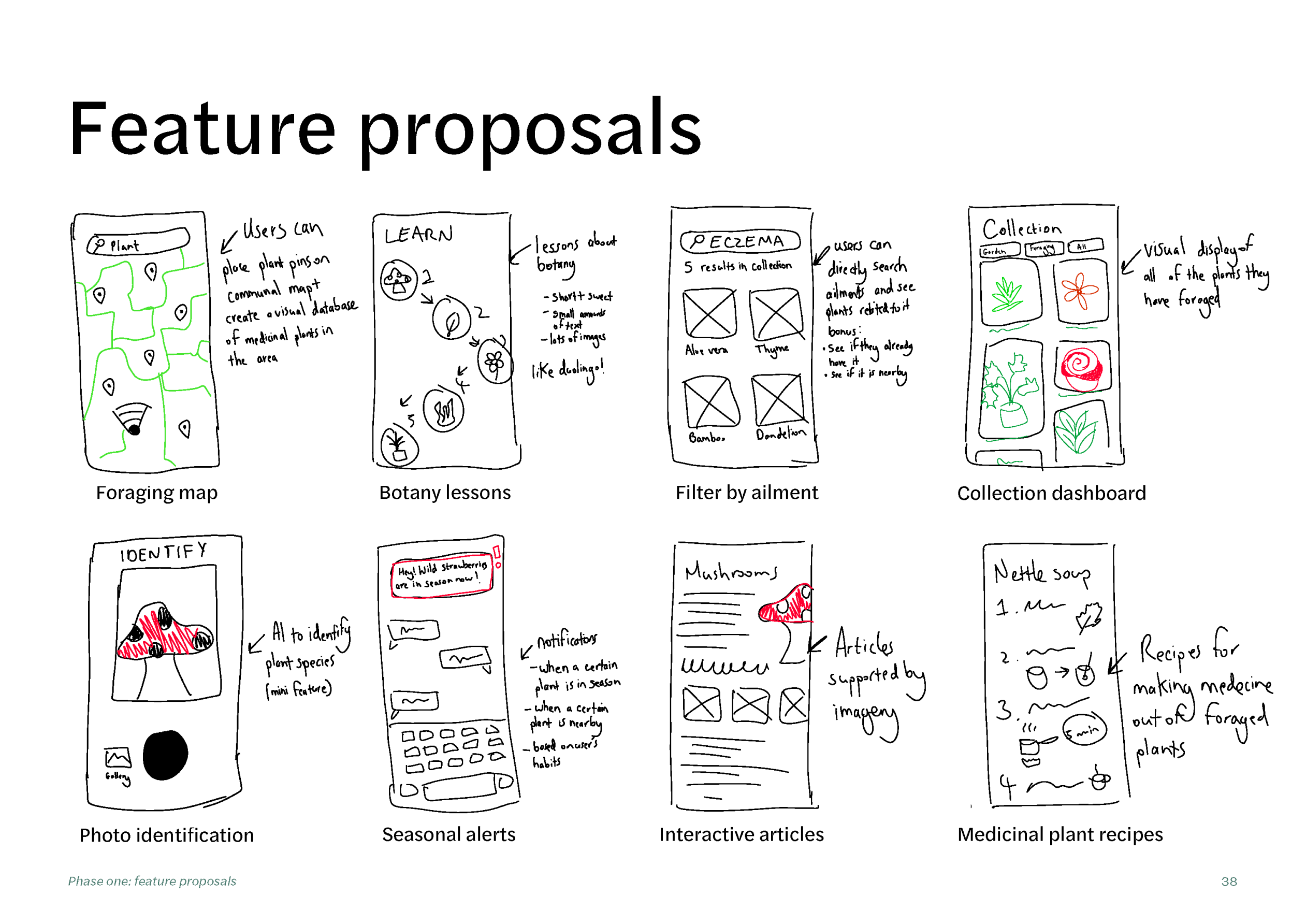
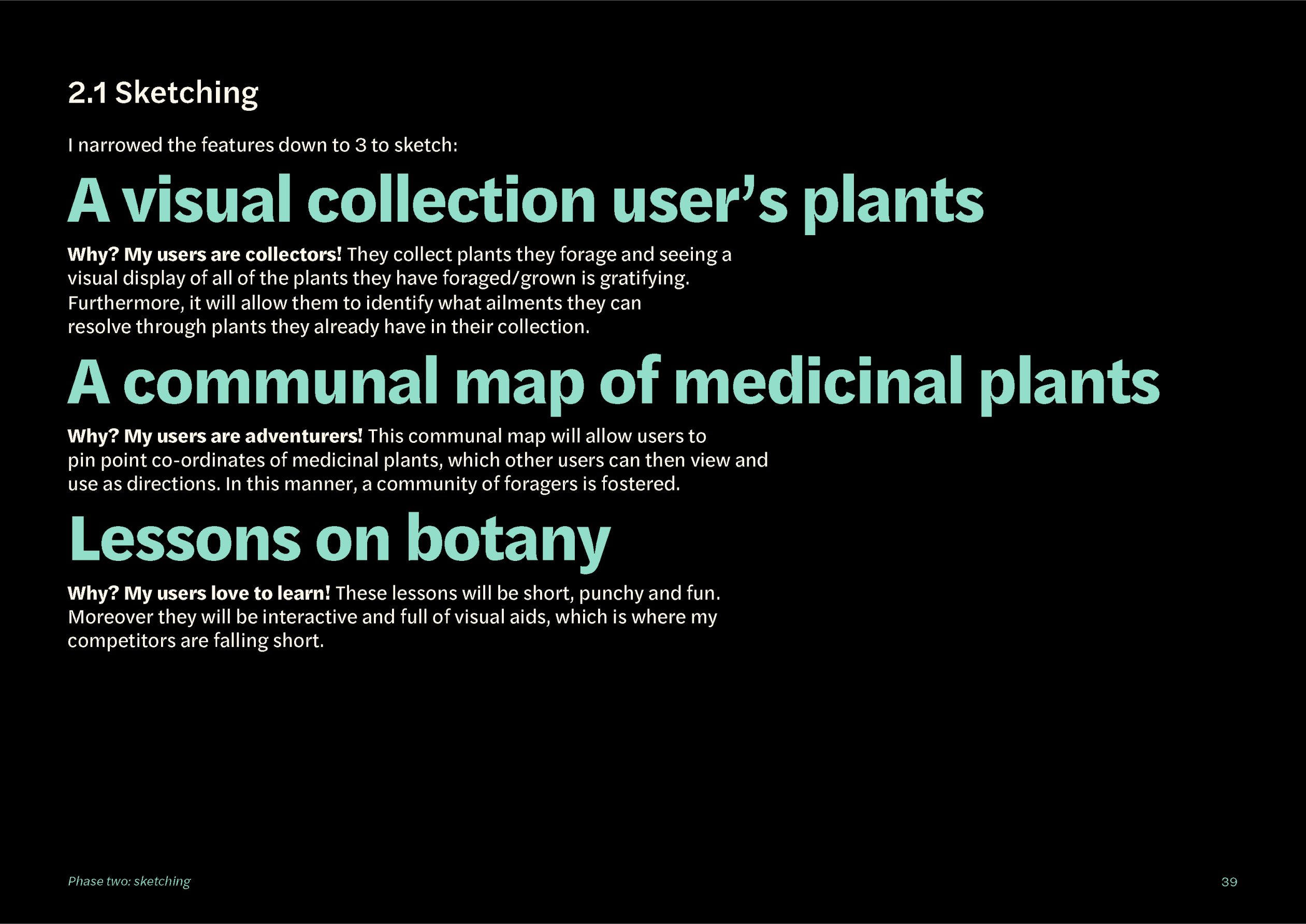
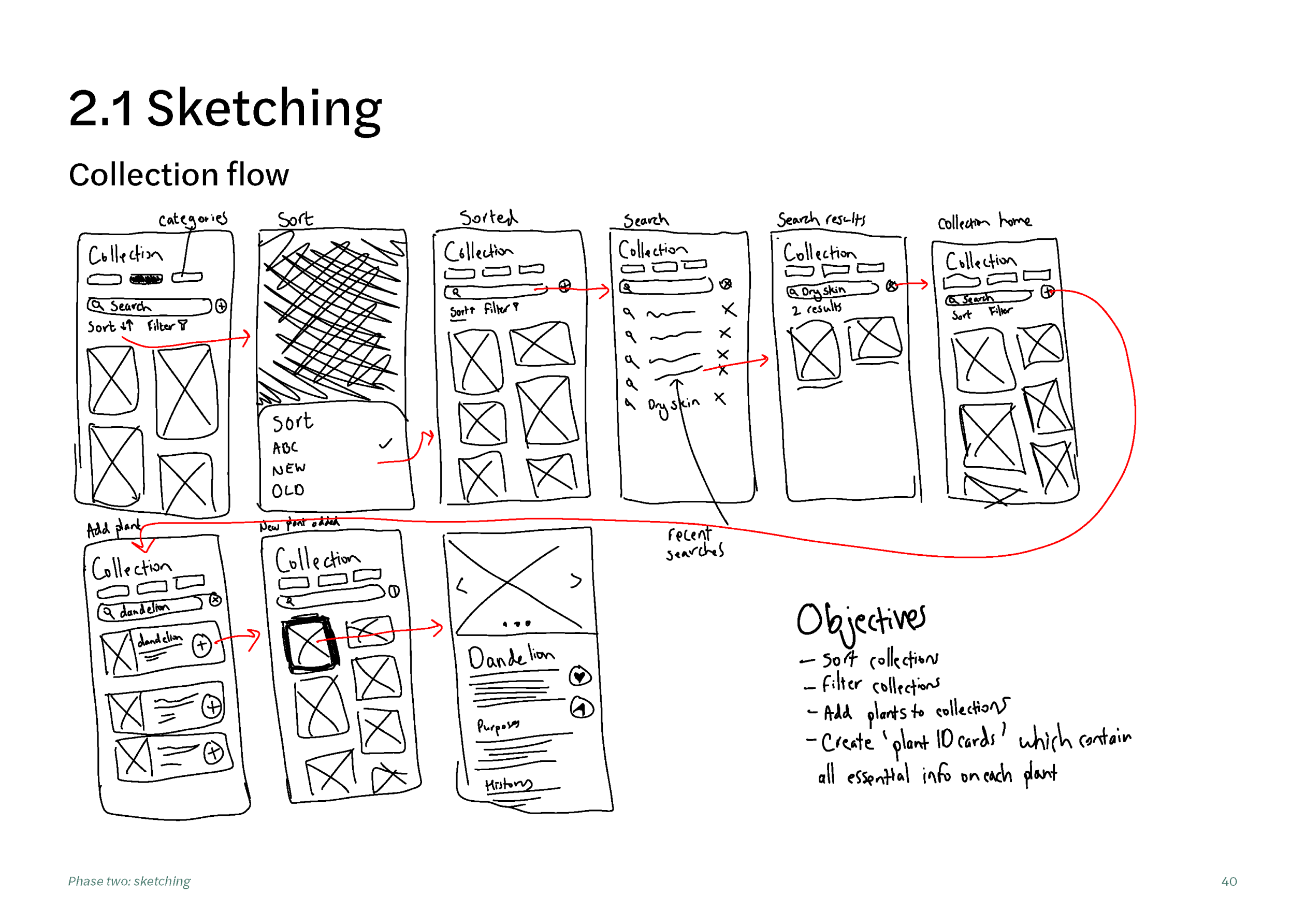
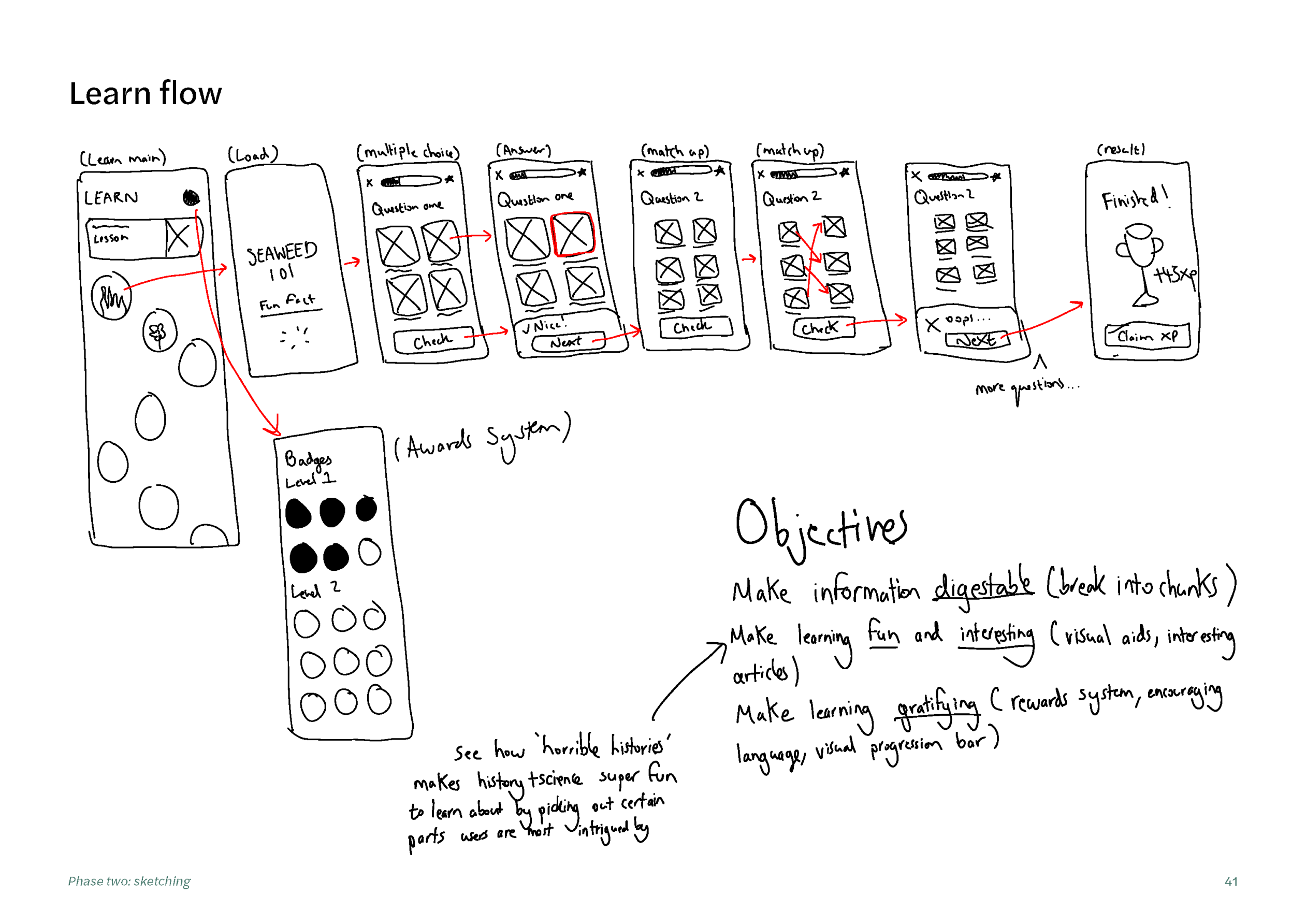
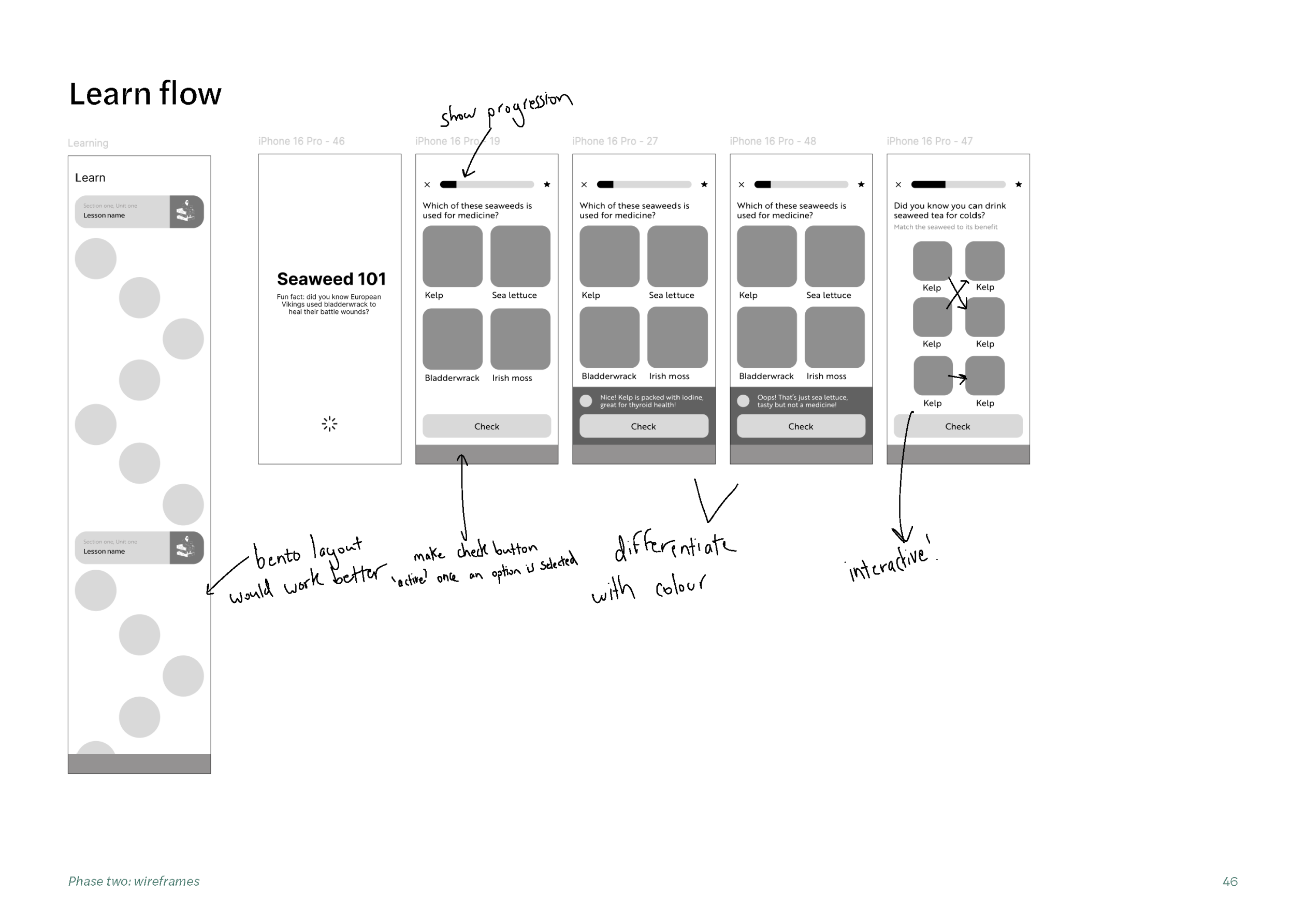
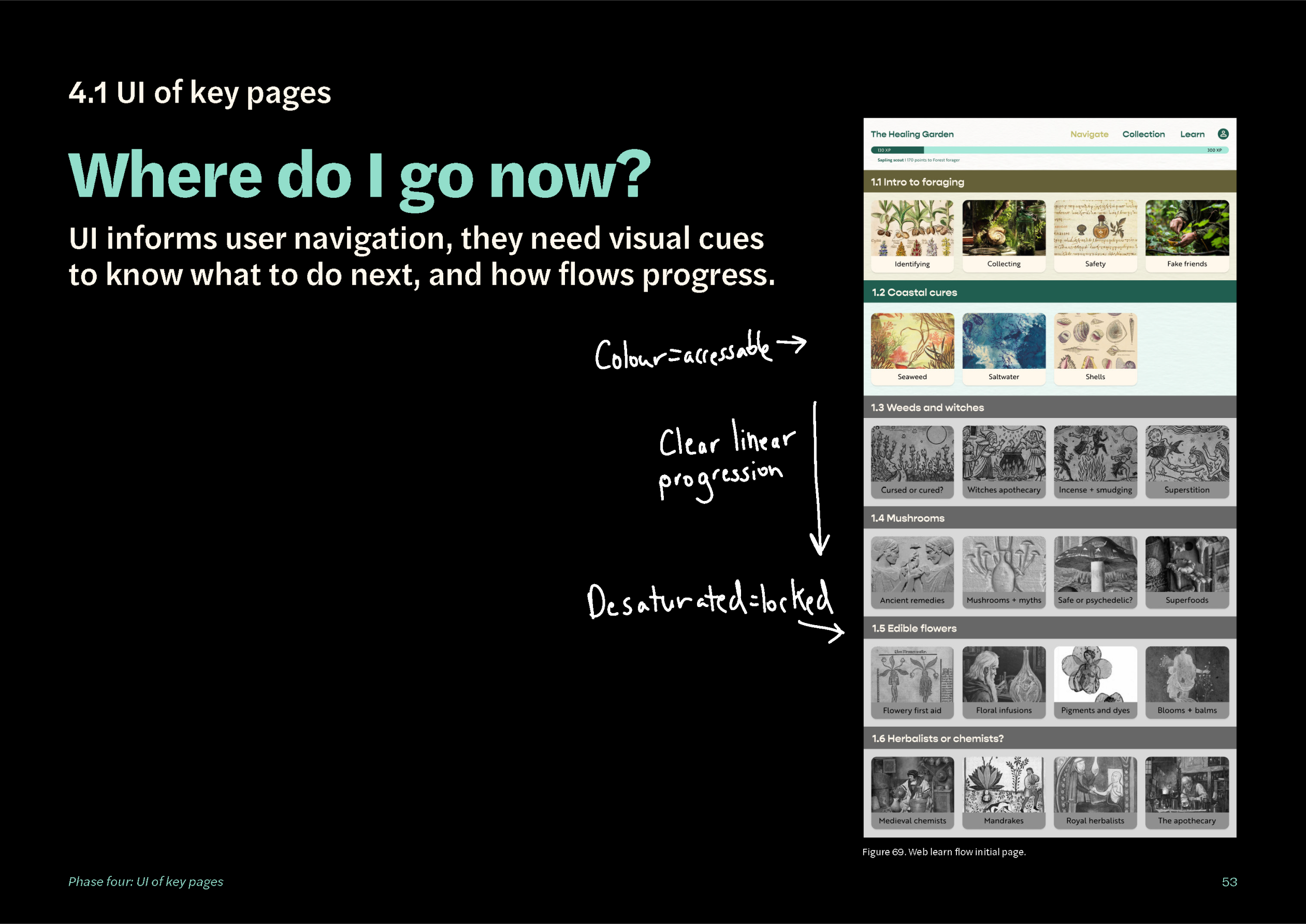
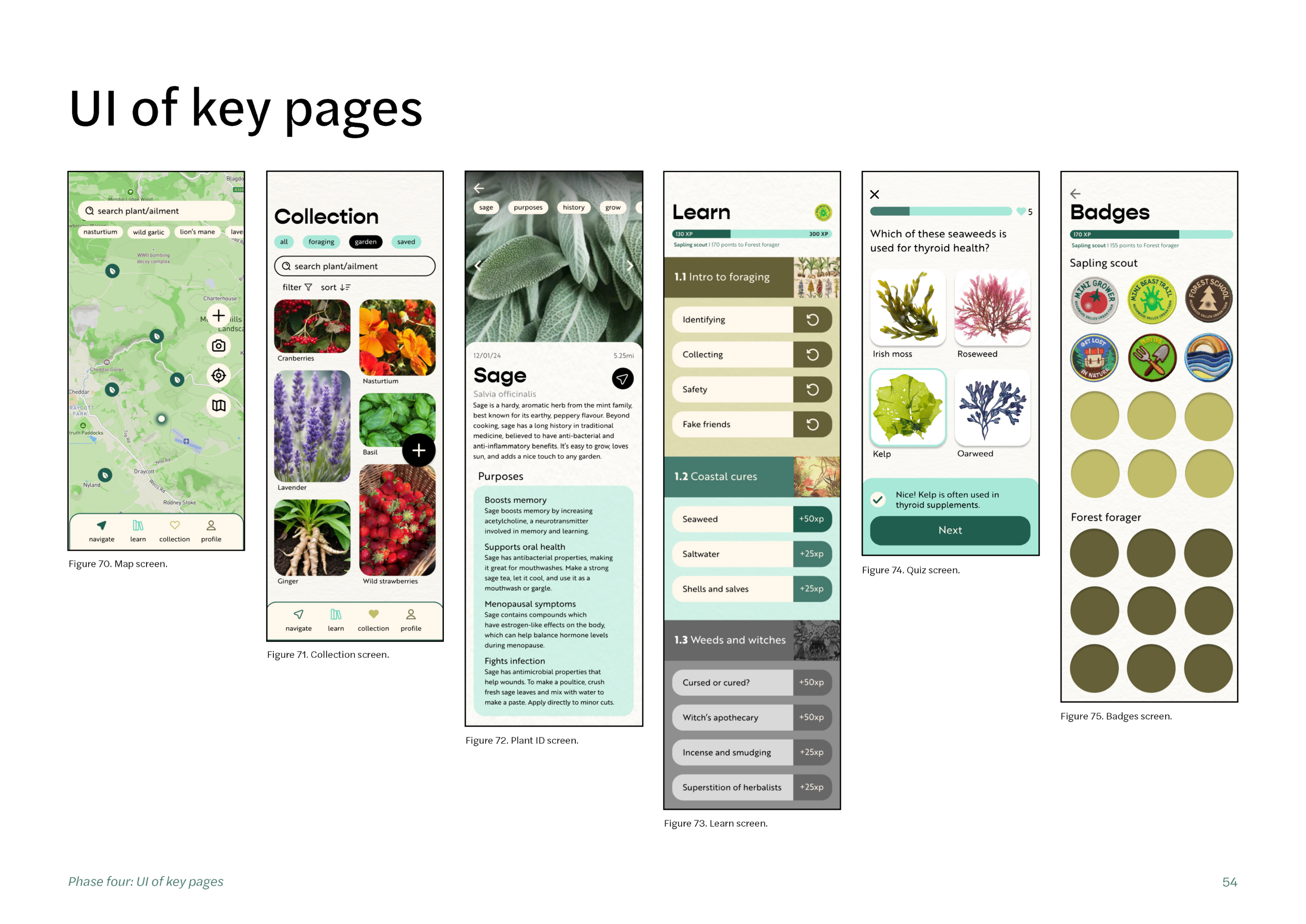
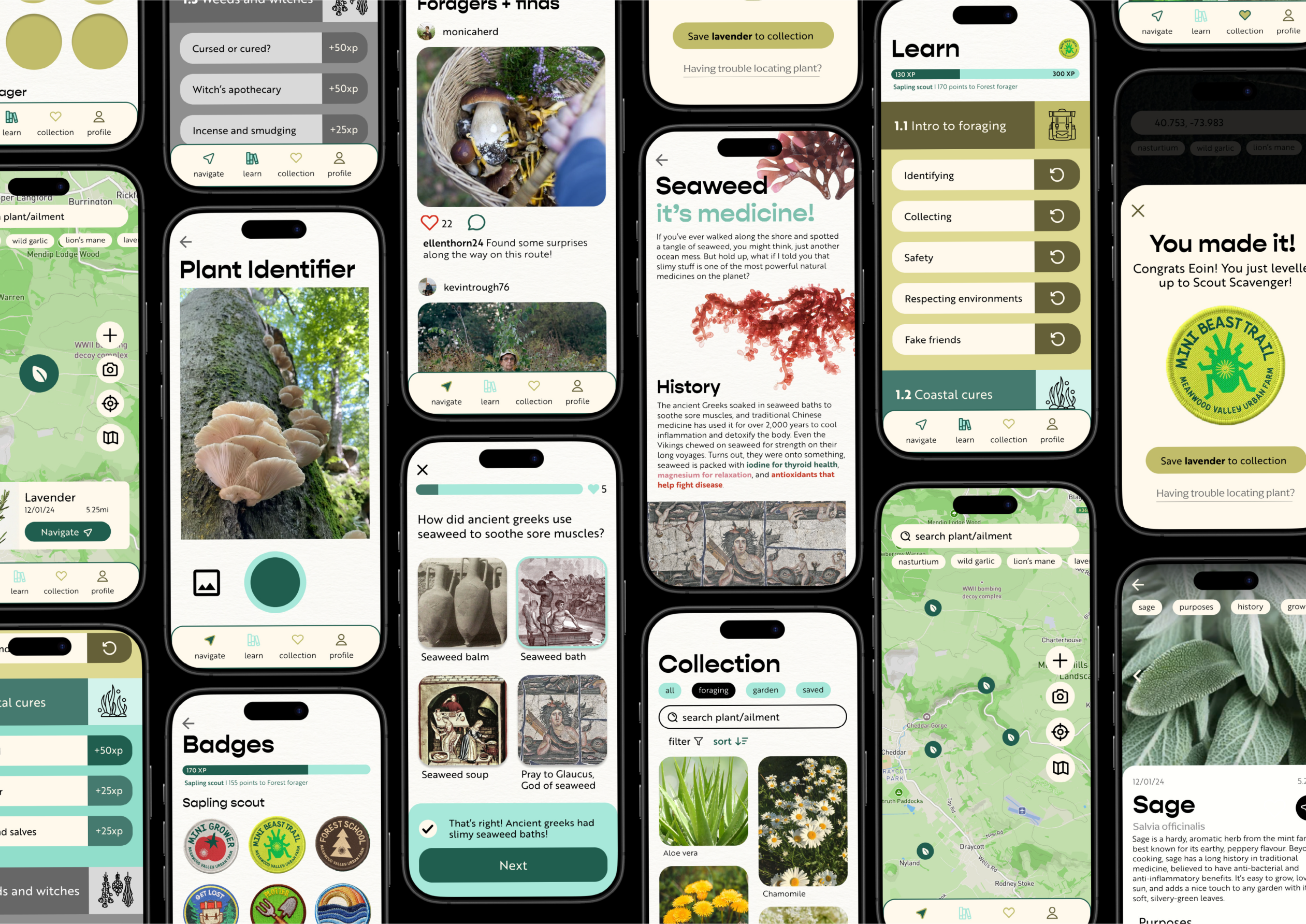
This single observation became a key design insight: existing resources were often inaccessible; using field-specific jargon, and overwhelmingly lengthy sections of text. In response, The Healing Garden provides short and snappy interactive lessons, with information broken down into digestible chunks, and gamification to encourage learning. This journey transformed research findings directly into product features.
User empathy
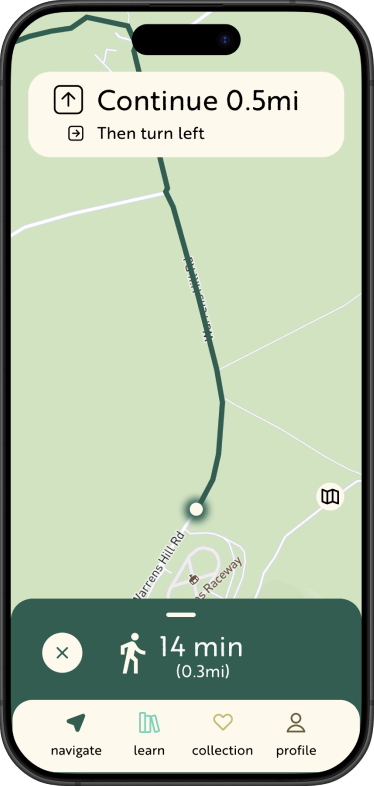
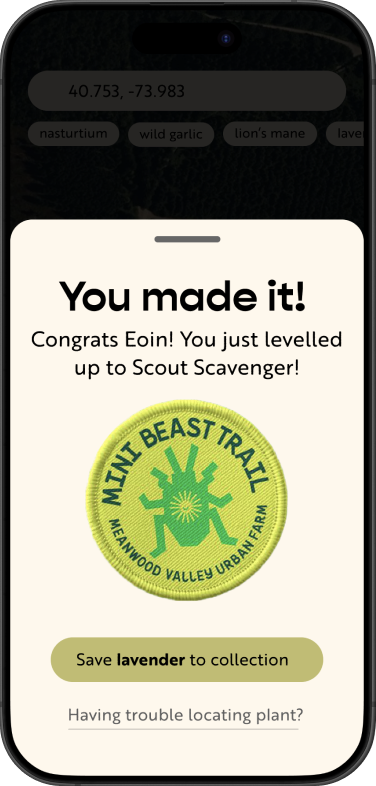
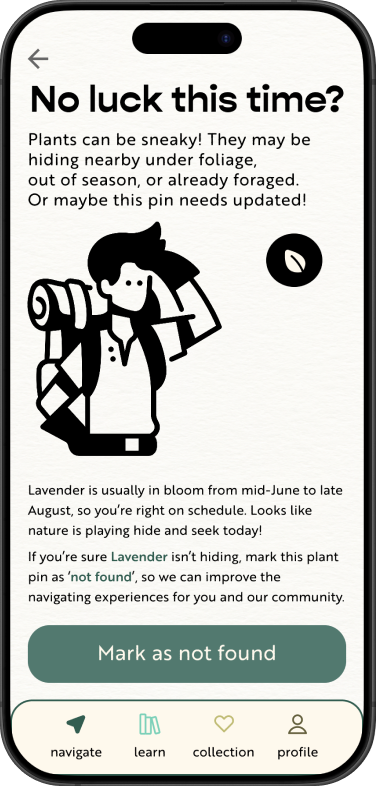
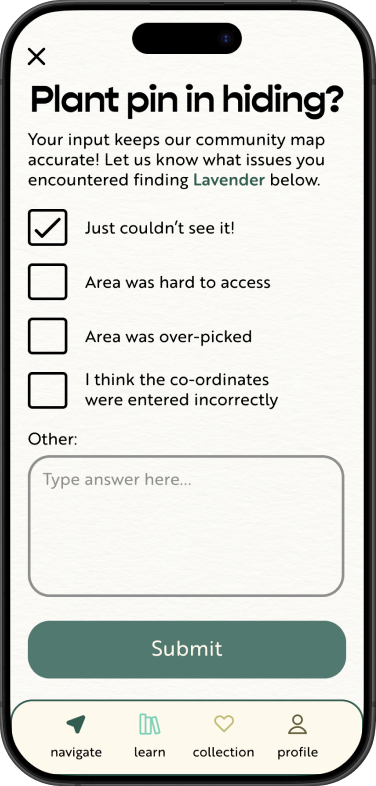
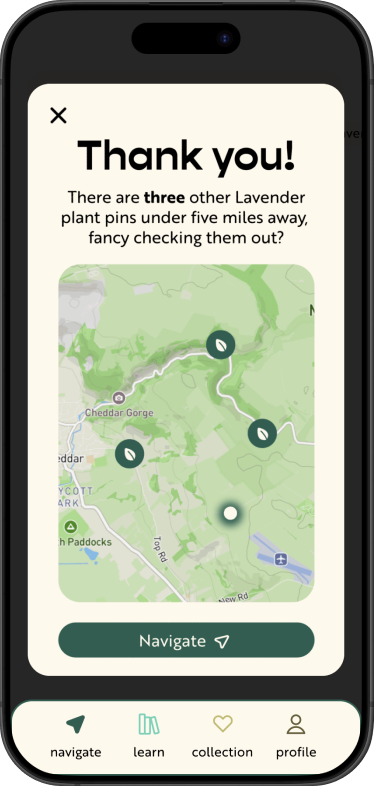
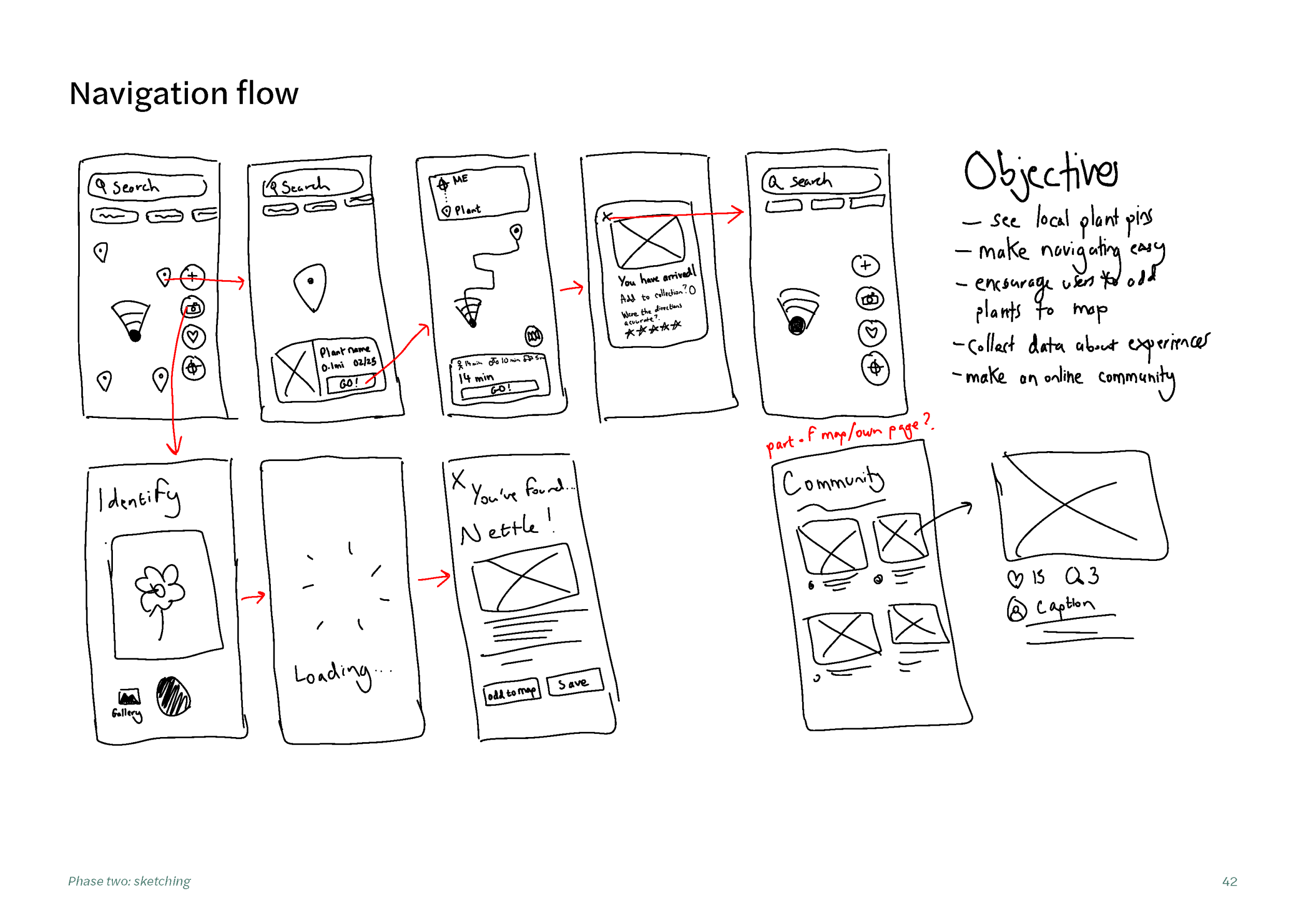
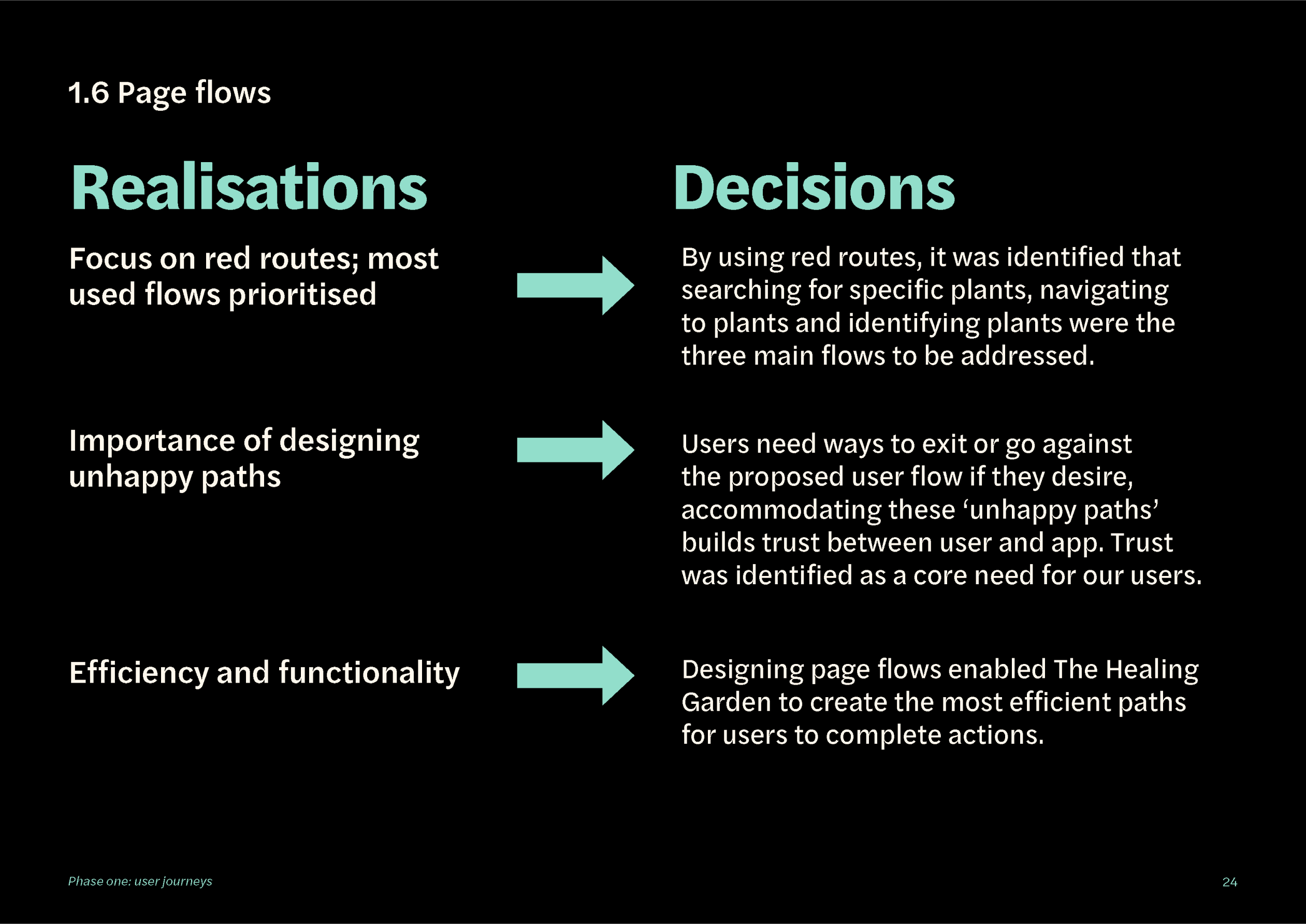
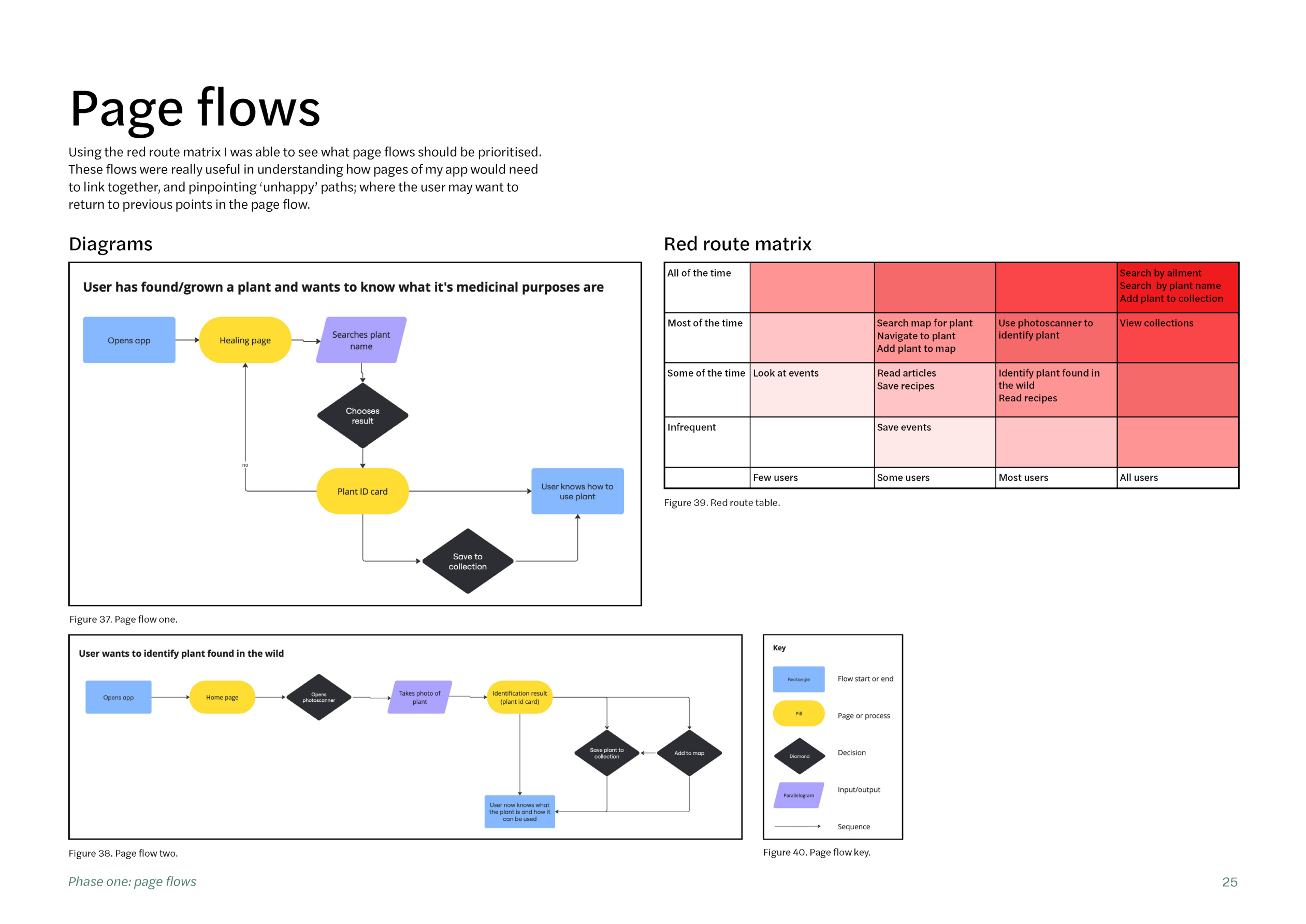
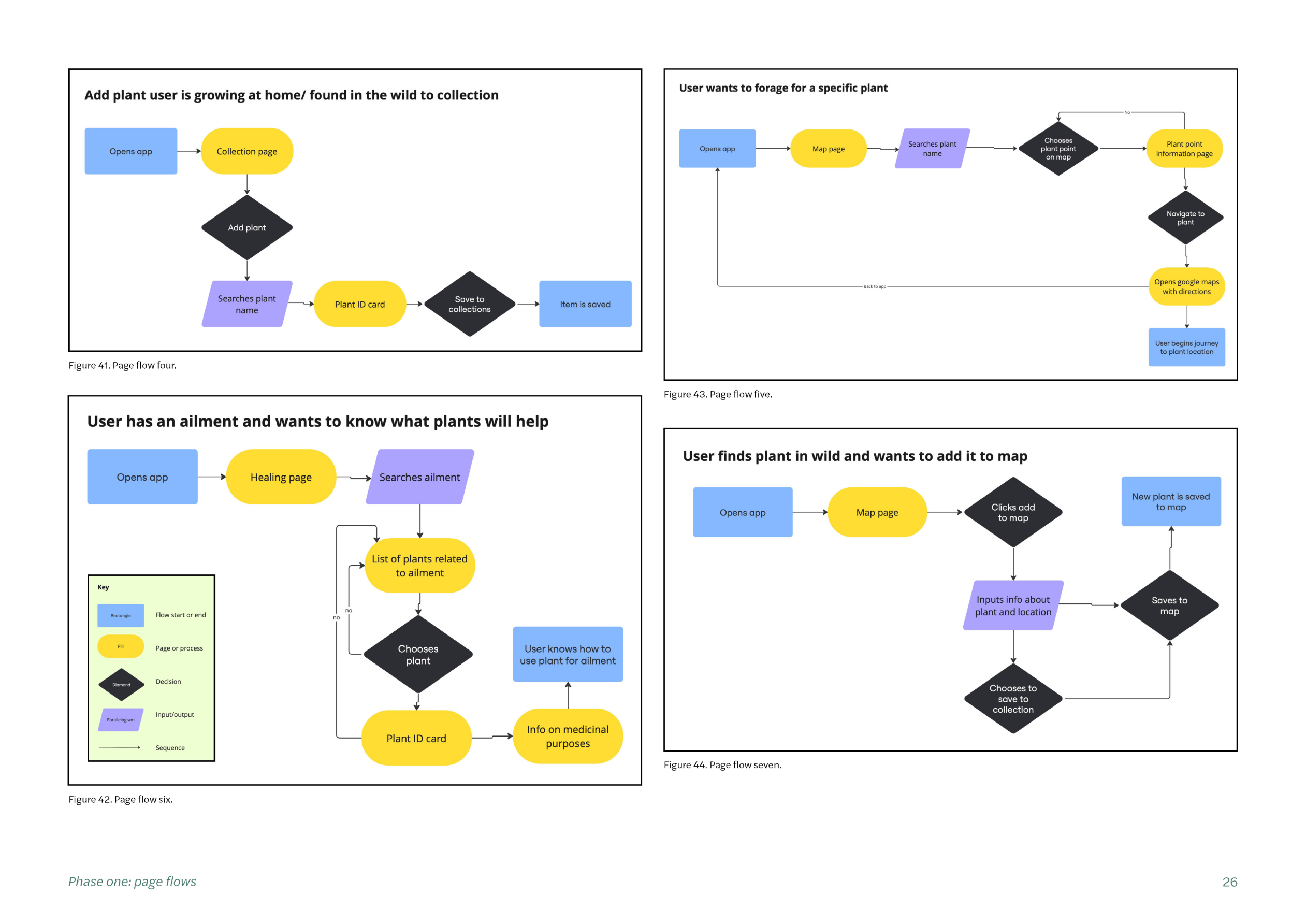
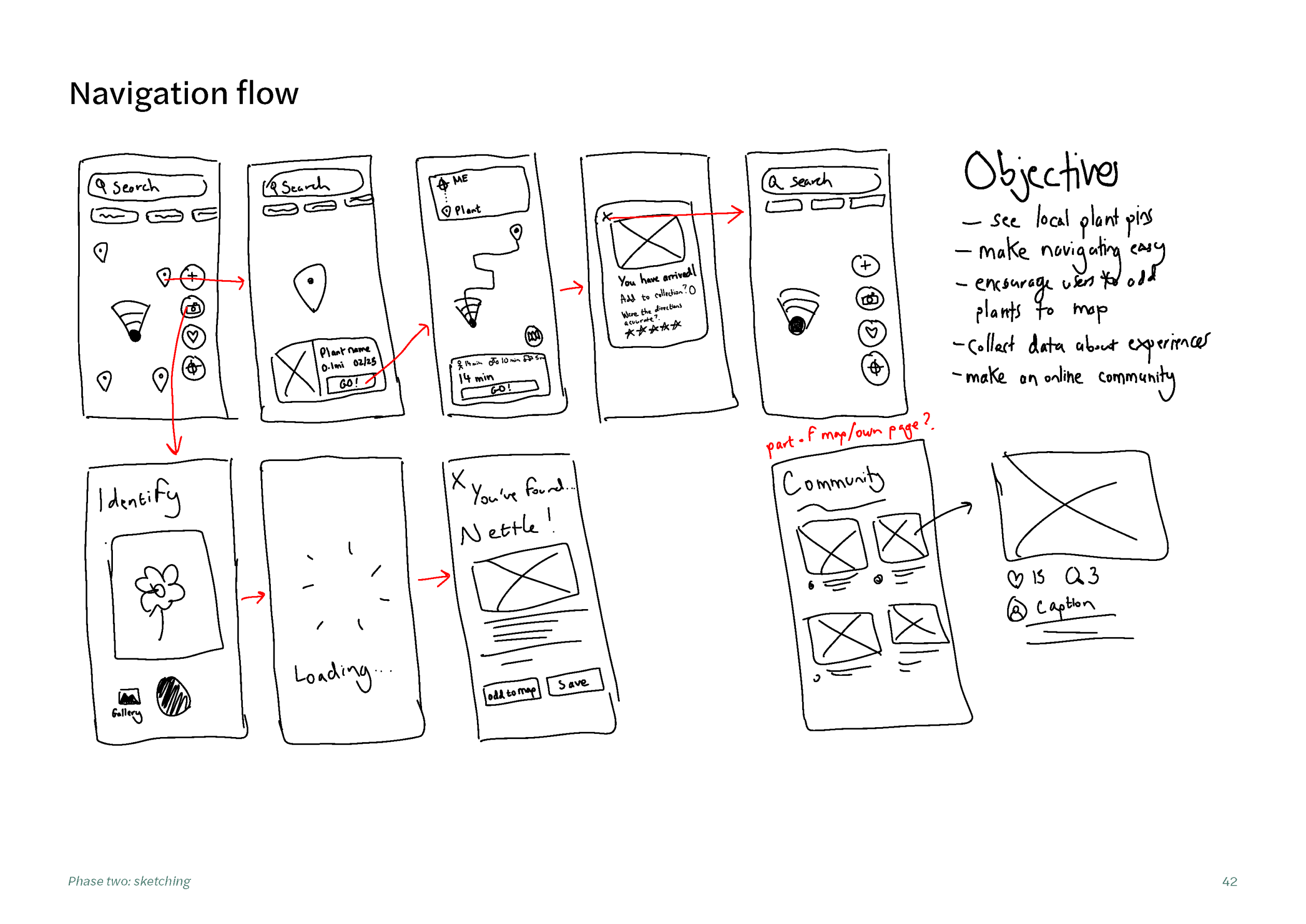
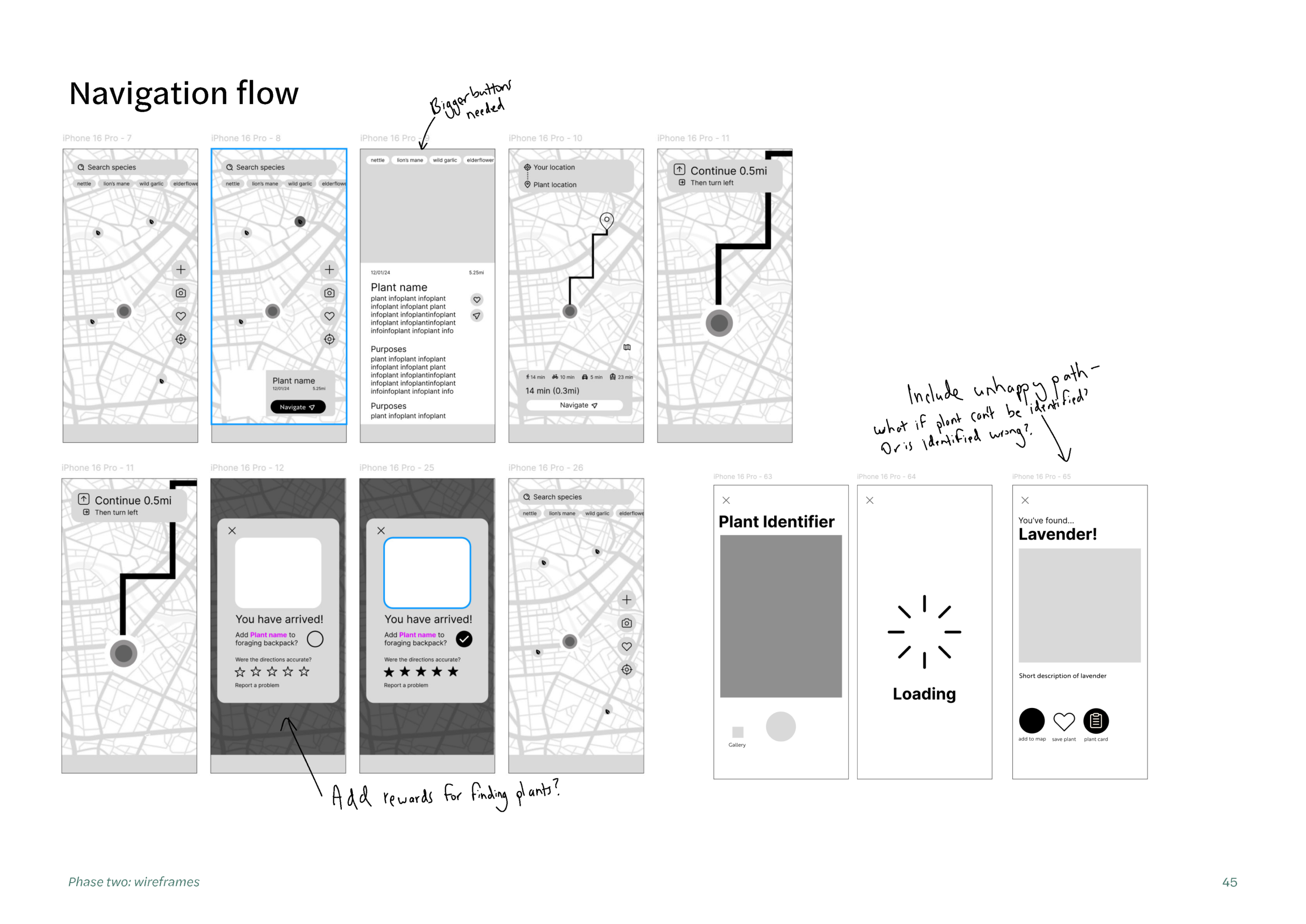
A particularly valuable lesson came from designing 'unhappy paths'. The app includes a community-driven map where users can locate medicinal plants shared by others. Initially, the flow ended when users arrived at a pinned location. However, I recognised a critical issue: what happens if the plant is no longer there, has been misidentified, or the user simply cannot find it? Instead of leaving users at a dead end, I redesigned the journey to acknowledge their frustration, offer alternative actions, and guide them towards a resolution. This small interaction reinforced trust between the user and the product, demonstrating how UX design often happens in edge cases rather than ideal scenarios.

Modular design
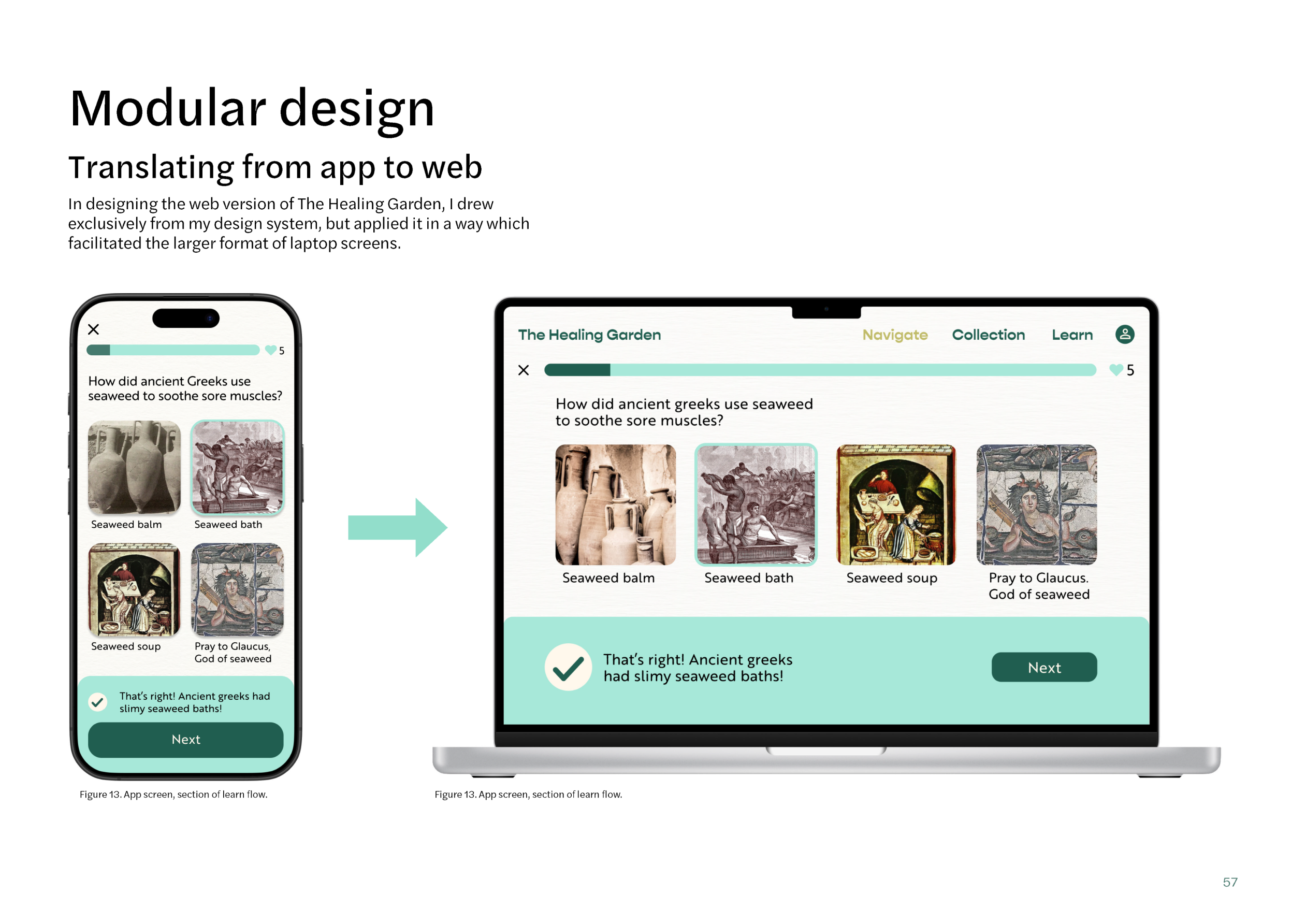
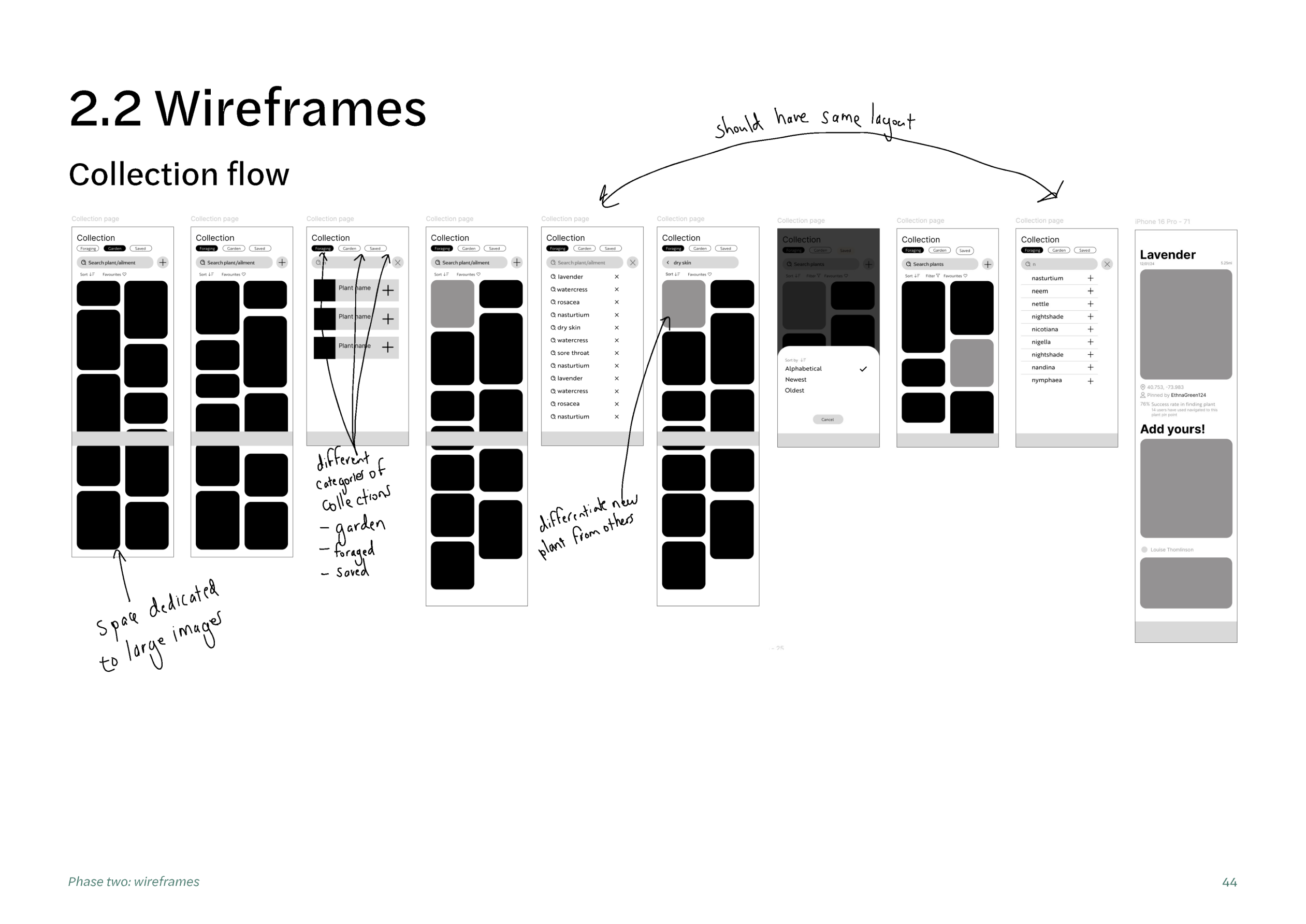
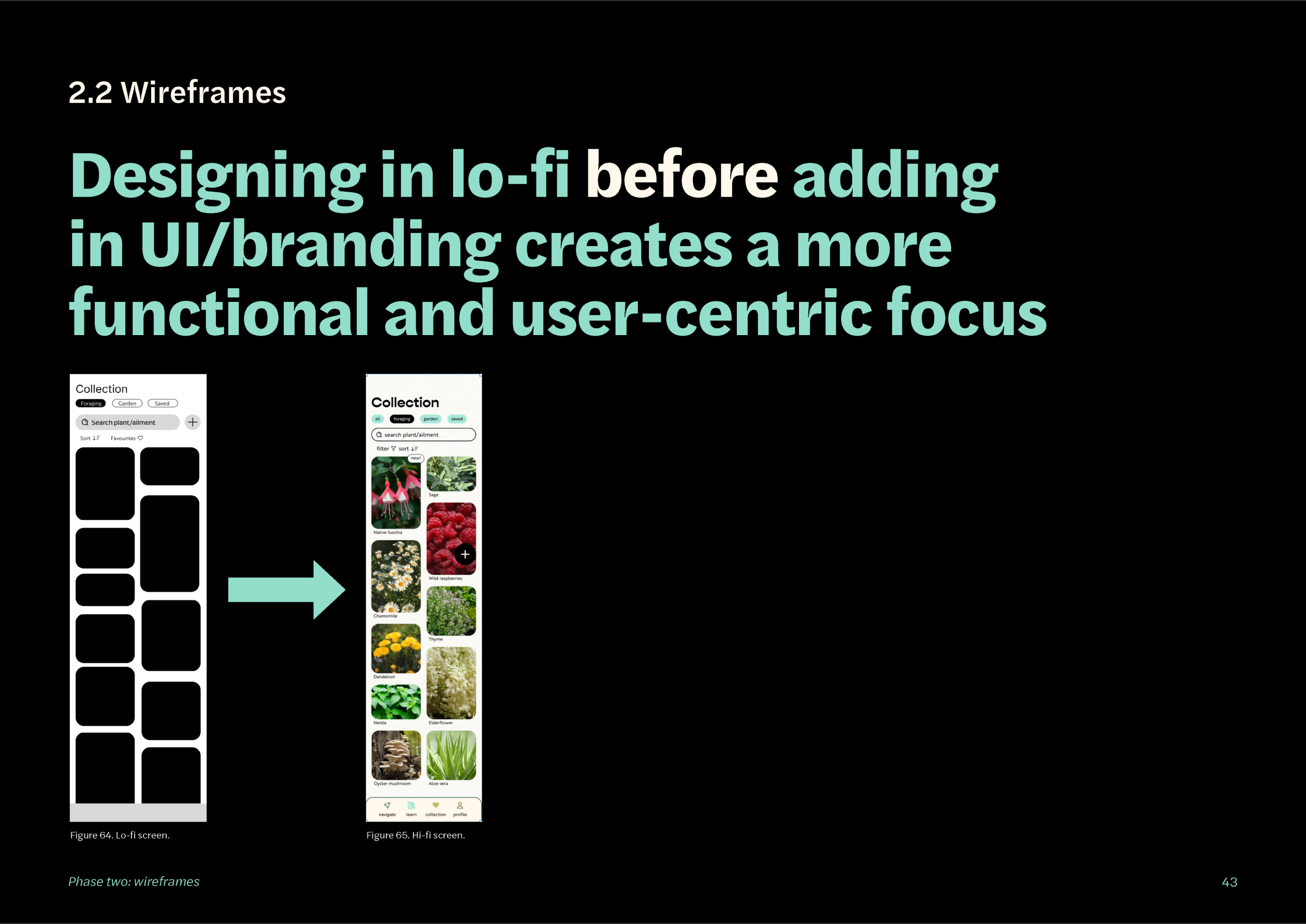
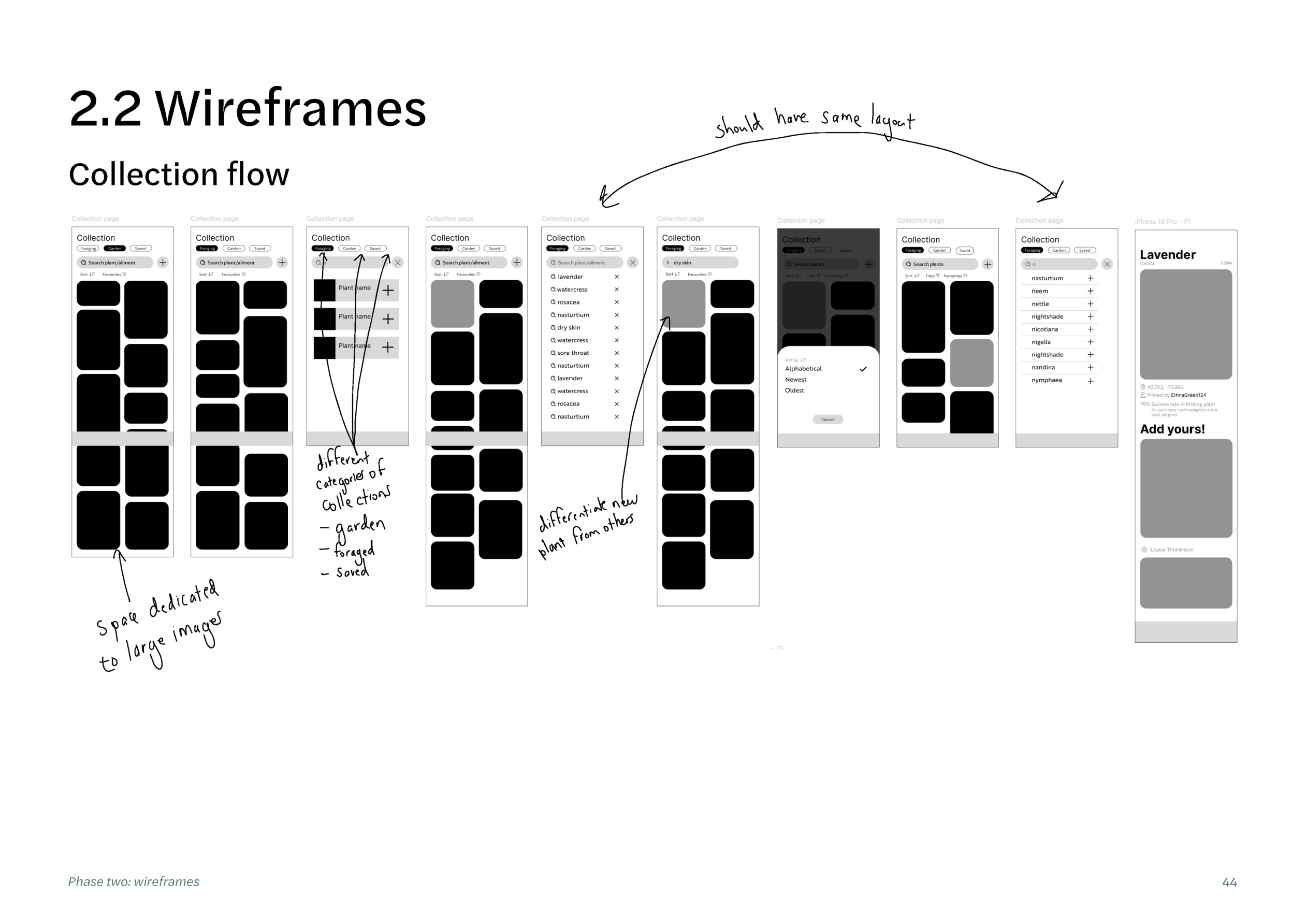
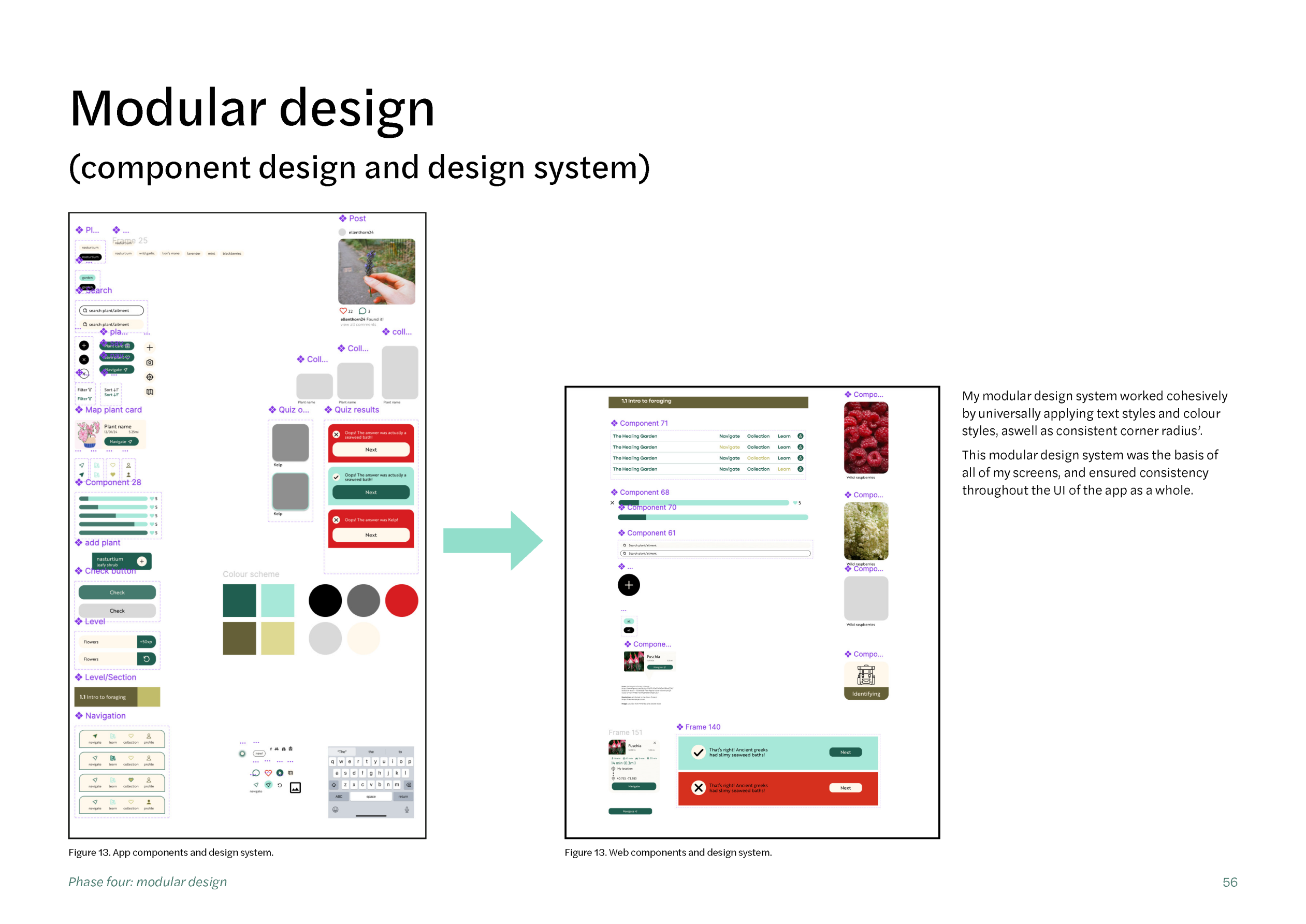
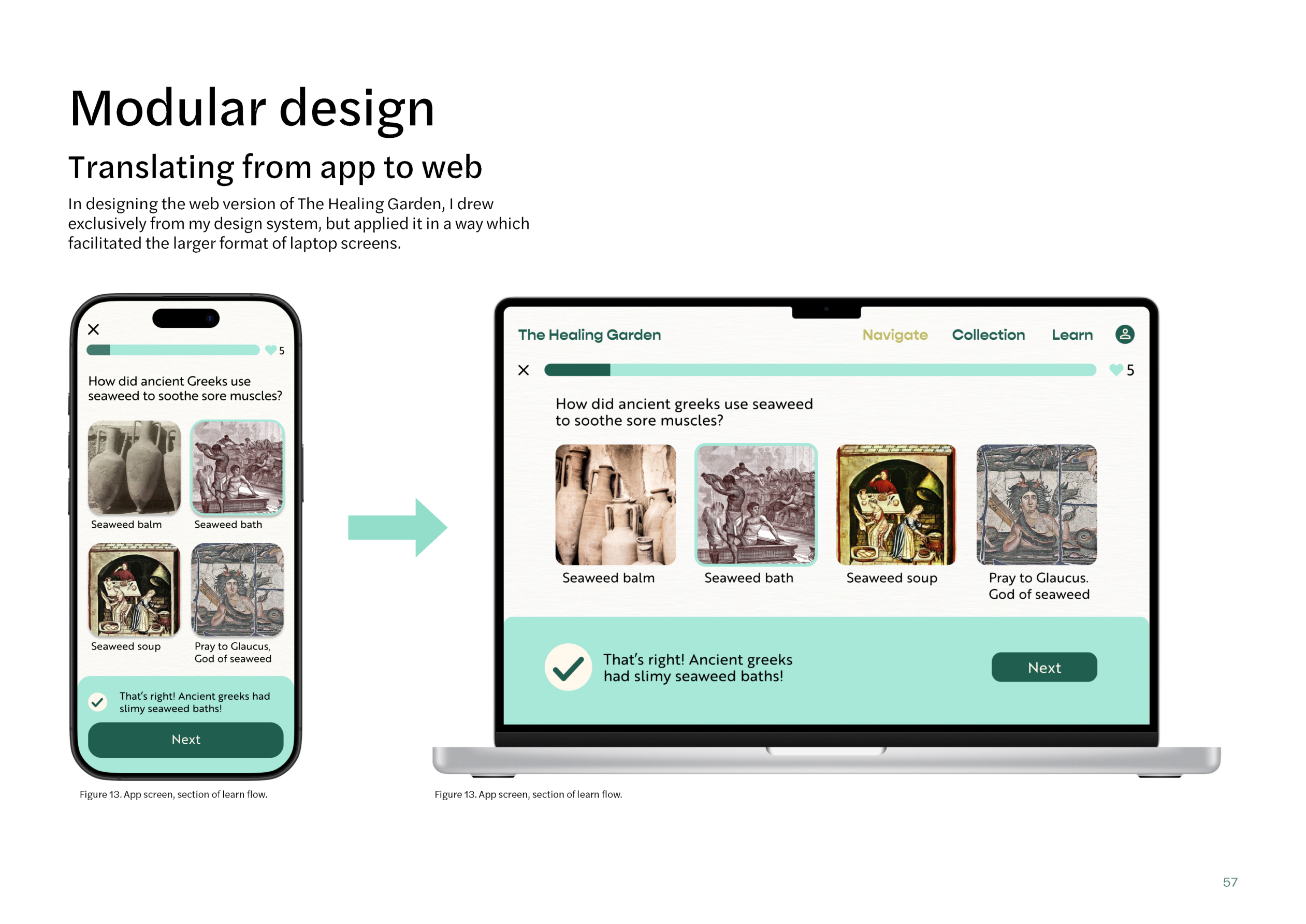
The project also strengthened my understanding of designing systems across multiple devices. I developed a modular design system that translated seamlessly between mobile and desktop experiences, ensuring consistency while adapting layouts and interactions to suit different screen sizes and contexts.

Prototype walkthrough
Figma clickable prototype


The Healing Garden workfile
Examiner's award
I was privileged to receive the Examiner's award for excellence for this undergraduate project, highlighting my passion for researching user needs and experience.